


What Makes Bike Panniers Waterproof? How to Keep Your Gear Dry
Find out what really determines the waterproof performance of bicycle panniers. We explain the role of materials, welded and sewn seams, roll-top closures, hydrostatic head and IP ratings, as well as how to protect your gear in the rain and distinguish a leak from condensation. A practical guide from Polish manufacturer Extrawheel.
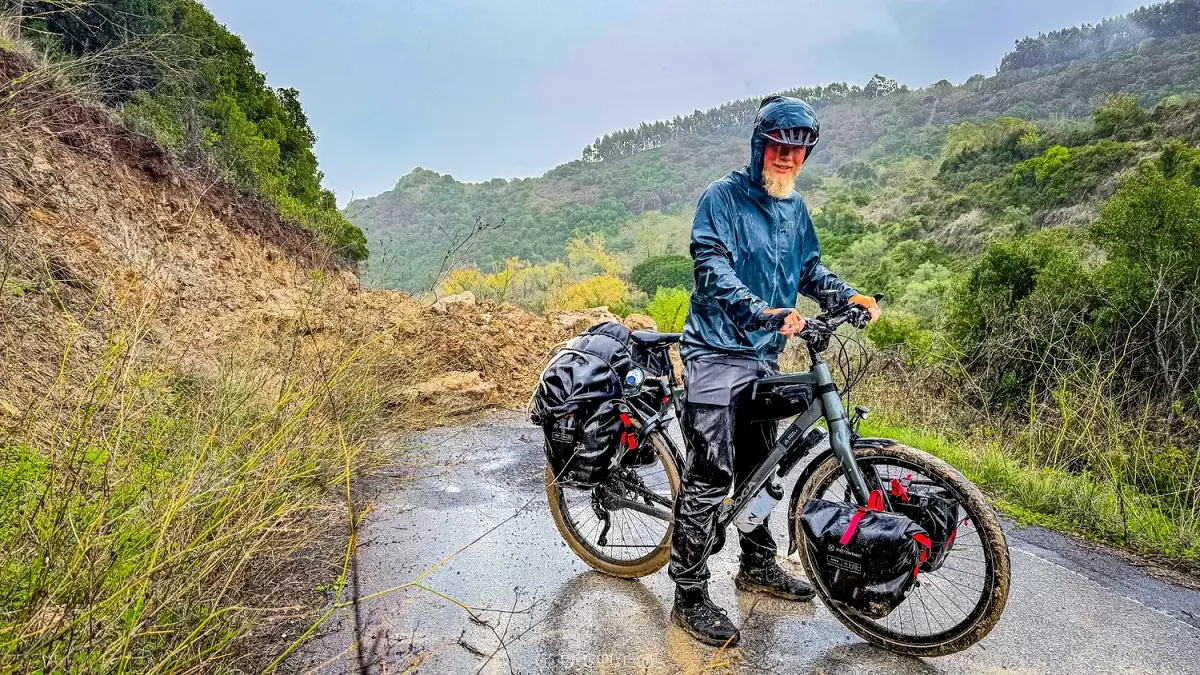
A bike pannier's waterproof performance depends on its complete construction: the fabric's waterproof layer, sealed panel joins, a correctly closed opening and protection around mounting points. A pannier designed for wet weather will protect your gear when it is in good condition and closed according to its instructions. Protection against rain and road spray does not automatically mean that the bag can be submerged.
On a wet ride, panniers are exposed to rain, mud and spray from the wheels. What happens at a stop matters just as much: opening the main compartment, putting away a wet jacket or rolling down a muddy closure. When choosing bicycle panniers for wet-weather cycling, consider both their construction and how you will use them. This guide explains how to assess water protection, close a roll-top correctly and investigate moisture inside a bag.
Waterproof vs water-resistant panniers: how to read the description
Product descriptions use the terms “waterproof” and “water-resistant” in different ways. Neither word on its own explains the conditions under which protection is provided. When comparing waterproof bike panniers, establish what kind of water exposure the complete bag is designed for, which compartment the claim covers and how the bag must be closed.
Rain, spray and immersion place different demands on a bag. Underwater, pressure acts on the walls and closure, increasing with depth. Do not assume that a pannier suitable for a rainy tour can also serve as a dry container while swimming across a river unless the manufacturer explicitly allows that use.
Hydrostatic head and IP ratings measure different things
| Specification | What it tells you | What it does not establish |
|---|---|---|
| Fabric hydrostatic head, in mm of water | How a tested fabric sample resists water penetration under pressure. | Whether the closure, mounting points or complete pannier are watertight. |
| IP rating | The level of ingress protection defined by the complete code and its test conditions. | Protection against every water jet, immersion depth or length of exposure. |
| A claim of protection against rain | The product's intended use and the instructions you must follow. | A specific IP rating or suitability for immersion. |
ISO 811:2018 describes a method for testing fabrics under hydrostatic pressure. The IP code comes from IEC 60529, the standard for protection provided by enclosures; IP ratings also appear in outdoor equipment specifications. A fabric sample's test result cannot be converted into a safe immersion depth for a complete pannier.
What keeps water out of a pannier? Four construction details
1. The fabric and its waterproof layer
The base fabric provides mechanical strength, while a suitable coating or laminate layer forms the barrier against water. This is why the word “polyester” or “CORDURA®” alone does not tell you whether a bag is waterproof. The construction of the specific material and the condition of its waterproof layer are what matter.
Mud is easy to wipe off a smooth coated surface. A fabric with an exposed textile outer face may look wet after rain even when the waterproof layer beneath it is still protecting the compartment. A wet outer surface is not proof of a leak, and water beading on the fabric is not a test of the complete pannier's waterproof performance. Read more about CORDURA fabric and its properties in our materials guide.
2. Welded joins and sealed seams
In a welded construction, compatible layers of material are joined without making needle holes through the welded area. A continuous join limits potential routes for water to enter. We use 3D HFW welding technology in selected Extrawheel panniers.
A sewn pannier can also protect against rain when its seams are properly sealed. Check that welds and seam sealing are continuous, particularly around the base and corners. Assess the quality of the complete join rather than judging a bag solely by the presence of stitching or the name of a manufacturing process.
3. The roll-top opening and closure
Rolling down the top creates successive layers of folded material that help prevent water entering the compartment. The closure works as intended when it is clean, evenly rolled and secured correctly for that model. Grit, loose folds or a jacket sleeve caught in the opening can stop the layers from sitting together properly.
4. Mounting points and additional pockets
Where mounting components pass through the pannier wall, the way those points are sealed also affects water protection. Inspect the areas around rails, hooks and stiffeners. Recurring damp patches, fabric damage or changes following a modification to the mounting system deserve attention. Do not tighten fasteners beyond the manufacturer's instructions or substitute unsuitable parts for components that help seal the bag.
The main compartment's waterproof protection does not necessarily extend to every pocket. An external pocket, open mesh section or organiser may serve a different purpose. An internal pocket is not a replacement for a separate waterproof electronics case unless it is itself designed as an independently sealed, closable compartment.
How to close a roll-top pannier correctly
Check the required number of rolls and the fastening method for your specific model. Too few rolls, an uneven opening or an overfilled compartment can compromise protection even when the fabric and joins are in good condition.
Construction and closure examples from Extrawheel
These three models illustrate different materials and ways of joining panels:
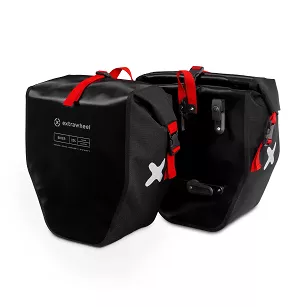
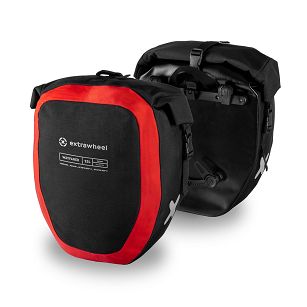
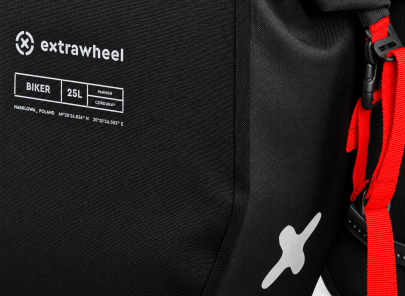
- Extrawheel Biker 50 L — a pair of 25 L panniers made from PVC-coated polyester, with 3D HFW welded construction.
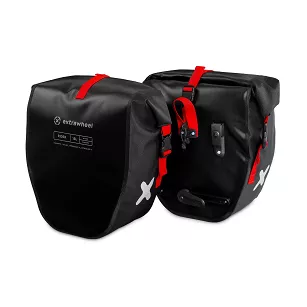
- Extrawheel Rider Premium 30 L — a pair of 15 L panniers made from CORDURA®, with 3D HFW welded construction.
- Extrawheel Wayfarer Premium 50 L — a pair of 25 L panniers made from CORDURA®, with sewn construction and seams sealed on the inside.
To obtain rain protection with these three models, roll the top down four times, fasten the buckles and compress the pannier as instructed. The closure instructions are stated on the linked product pages. For other panniers, bags and dry bags, follow the instructions for their particular construction.
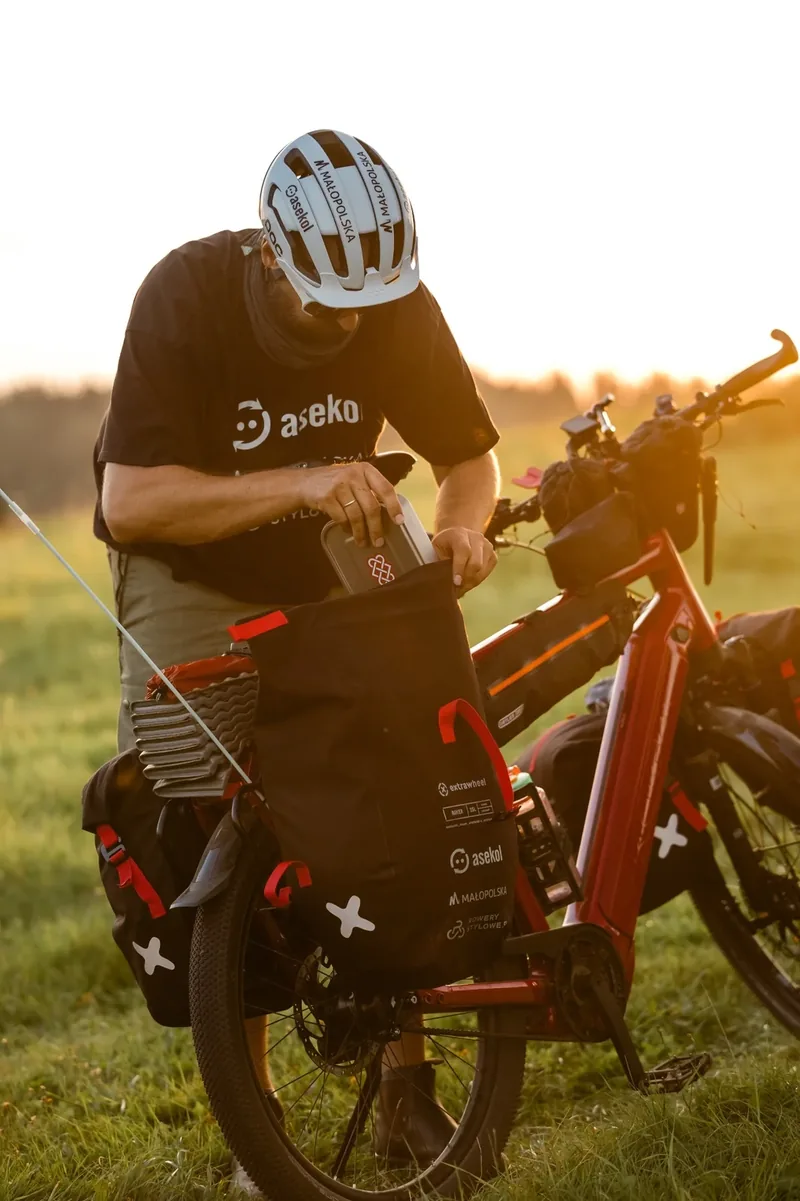
Closing the pannier step by step
- Leave enough fabric above the load. Pack to a level that allows all the required rolls without forcing your gear into the closure.
- Clean the edges. Remove water, sand and mud. Check that no straps, clothing or packaging are sticking out.
- Align the edges. Bring the two sides of the opening together, flat across the full width. Pay particular attention to the corners, where uneven folds can form.
- Make full, even rolls. Use the number specified for the model. Curling over a narrow strip of the edge does not replace properly rolling down the top.
- Fasten the buckles and position the straps. Secure the closure as instructed. Check that the roll cannot loosen and that nothing is trapped between the folded layers.
Check usable capacity with the pannier closed. When trial-packing, allow for food and anything else you may add during the trip. If there is not enough room for the required rolls, reduce the load or rearrange it. Pulling the straps tighter cannot make up for a lack of space above the contents.
How do you close a lightly packed pannier?
With a small load, let a little air into the pannier before rolling the top. Open the mouth and gently spread the sides of the compartment to let air enter. Bring the edges together and start rolling, leaving the bag slightly plumped out. This shape helps you keep the folded material even as you close it.
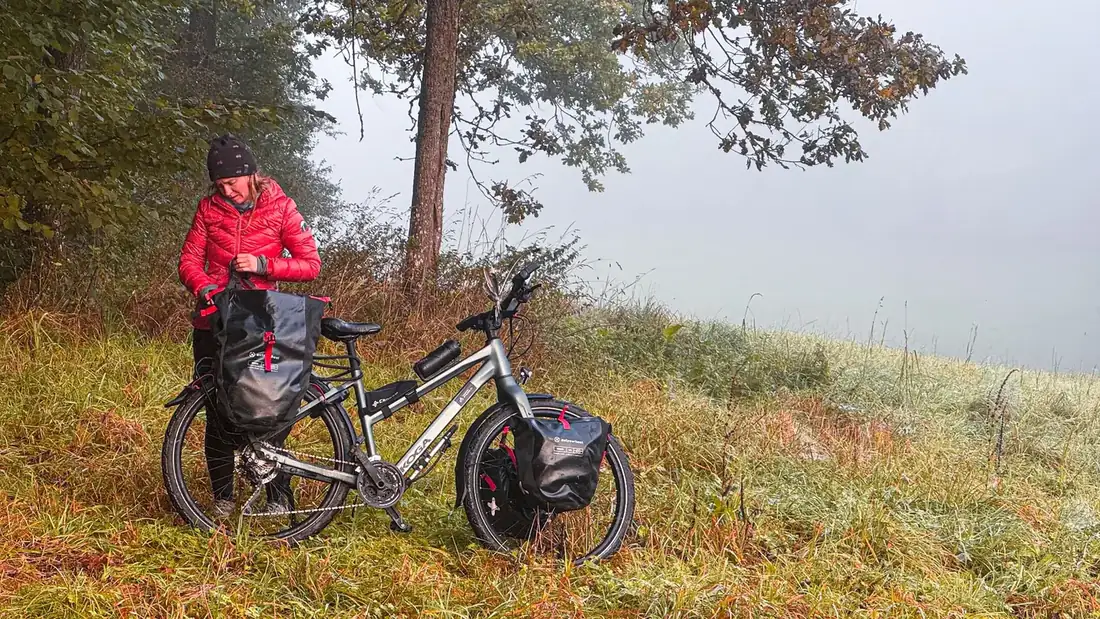
For the Extrawheel models described here, make four full rolls, fasten the buckles and adjust the compression to secure the closure while retaining a little air inside. Check the ends of the roll and the areas around the buckles: the layers should lie evenly together. After taking out a jacket or using up some of your food, readjust the straps to suit the current volume. If the roll loosens, open it, realign the edges and close the pannier again.
For a comparison of capacities and uses, read how to choose bicycle panniers. Our guide to packing bicycle panniers explains how to distribute your gear.
How to keep your gear dry during rides and stops
Water can enter an open compartment even if the closed pannier has protected your gear throughout the ride. Before setting off, make frequently used items easy to reach and keep dry sleeping equipment separate from wet clothing.
- Remove water from the rolled top before opening it. Use shelter where possible. Unroll the opening carefully so that water and mud on the outside do not fall into the compartment.
- Pack wet items separately. A jacket, tent flysheet or towel can make the rest of your gear damp without any leak through the pannier. Separate wet items and dry them at the next opportunity.
- Give sensitive items extra protection. Put documents, your phone and your camera in suitable waterproof cases or bags. Electronics also need protection from impacts and pressure.
- Close the pannier fully after every stop. A quick break does not change the number of rolls or the fastening method required.
Waterproof dry bags can help separate your equipment. Check their capacity, closure and intended use. A compression sack is not necessarily waterproof, and wet items should not remain sealed away for longer than necessary for transport.
Gravel riding and bikepacking: protecting gear on wet tracks
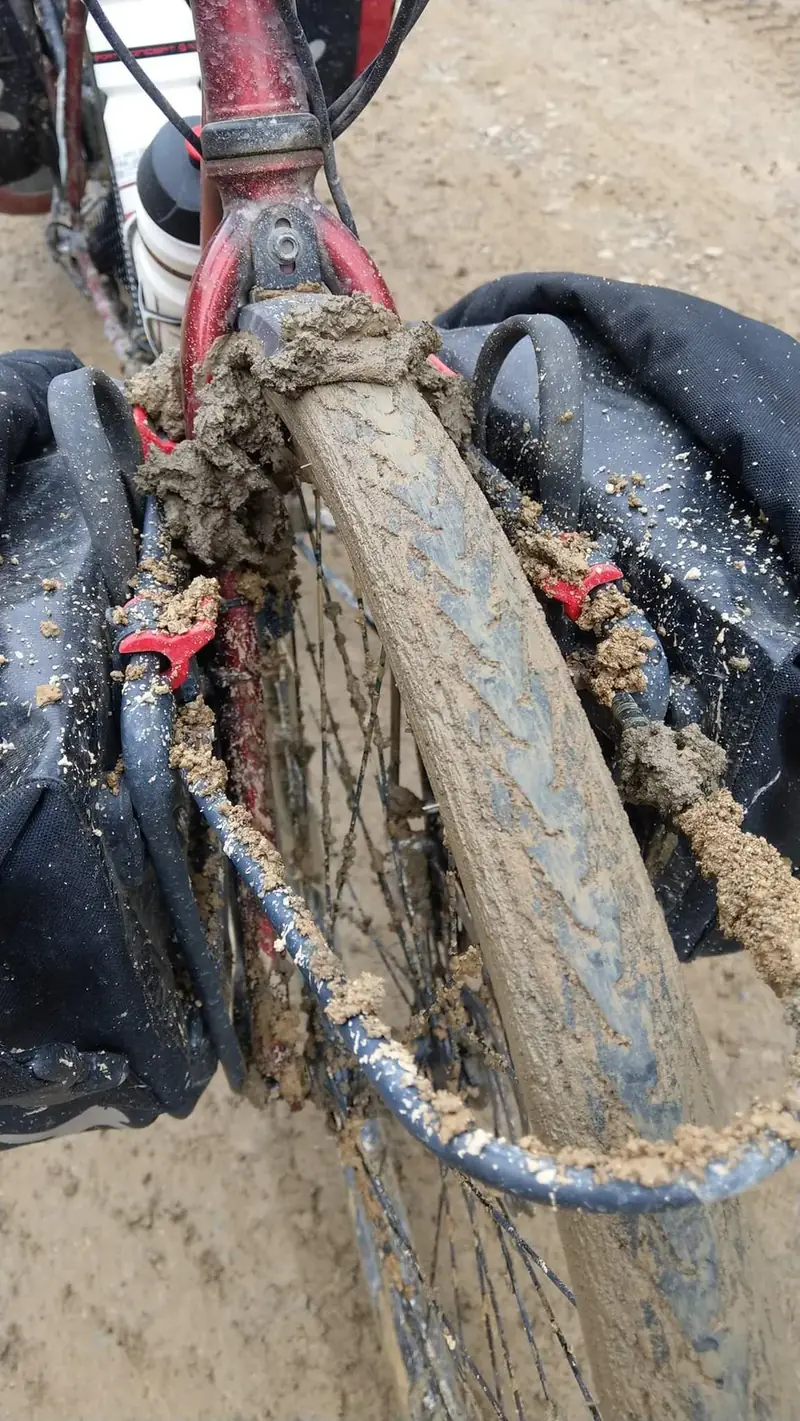
When choosing panniers for gravel bikes, check that they fit the rack and leave sufficient clearance from the tyre. Mud thrown up by the wheels can collect on the bag and closure. Clean the opening before unrolling it so that dirt does not enter the compartment, then complete all the required rolls after repacking. After rough sections, check that the pannier remains secure and is not rubbing against the bike.
If you are considering panniers for bikepacking, distinguish bags that need a rack from frame bags, handlebar bags and seat packs attached directly to the bike. In either setup, water protection depends on the complete construction. When choosing compact bags, allow enough room to close them properly. For a roll-top design, leave sufficient fabric above the contents to make every roll specified by the manufacturer.
Moisture inside a pannier: a leak, wet gear or condensation?
Moisture inside a pannier does not automatically mean the fabric has failed. Possible sources include damp gear, a spilled drink, opening the bag in the rain, an incorrectly closed top or damage to the bag. Water vapour can also condense on a cooler inner surface.
Before wiping the compartment dry, photograph the damp area and how the contents were packed. The location of a wet patch alone is not a reliable diagnosis: water can travel along the walls and through the contents.
| What you notice | What to check | First action |
|---|---|---|
| Dampness near the top of the compartment | The number of rolls, the ends of the closure, overfilling and whether the bag was opened in the rain. | Clean the closure, make space above the load and roll the top again. |
| Wet items concentrated in one area | Damp clothing, a wet flysheet and leaking bottles or containers. | Separate the source of moisture and dry the contents. |
| Small droplets on the inner walls | Damp gear and cooling inside the bag; also consider other ways water could have entered. | Empty and dry the pannier, then inspect the material and closure. |
| A recurring damp mark along a weld or seam | The continuity of the join and the condition of the coating and seam sealing. | Photograph both sides and ask the manufacturer or service team to assess the area. |
| Dampness near a mounting point or a worn patch facing the bike | Damage around the mounting hardware, sharp edges and points of contact. | Address the cause of rubbing and agree a suitable repair with the service team. |
How can you distinguish possible condensation from a leak?
A sealed pannier also traps moisture brought in with your gear. If an inner surface cools sufficiently, water vapour can condense on it. The compartment will therefore not dry a wet jacket or towel. At the same time, do not attribute every damp patch to condensation, particularly when moisture repeatedly appears beside the same join.
Empty and dry the pannier, then inspect it in good light. Check both sides of any suspect area and examine the closure. Do not replace this inspection with a pressure-washer test or by filling the pannier with water. These methods do not reproduce ordinary riding in the rain and may load the product in ways it was not designed to withstand.
If the problem returns, contact Extrawheel for service advice. Include the model, how you closed it, the riding conditions, whether you packed any wet items, and photographs of the inside and outside. This information helps us assess the likely cause and recommend a repair.
How to maintain water protection over time
After riding, remove mud with lukewarm water and a soft sponge or cloth. If necessary, use a small amount of mild cleaning solution, then rinse it off thoroughly. Clean the roll-top opening and the areas that touch the rack. Store panniers completely dry, without tightly compressing them, and away from heat sources. Avoid harsh solvents, pressure washers and drying on a radiator.
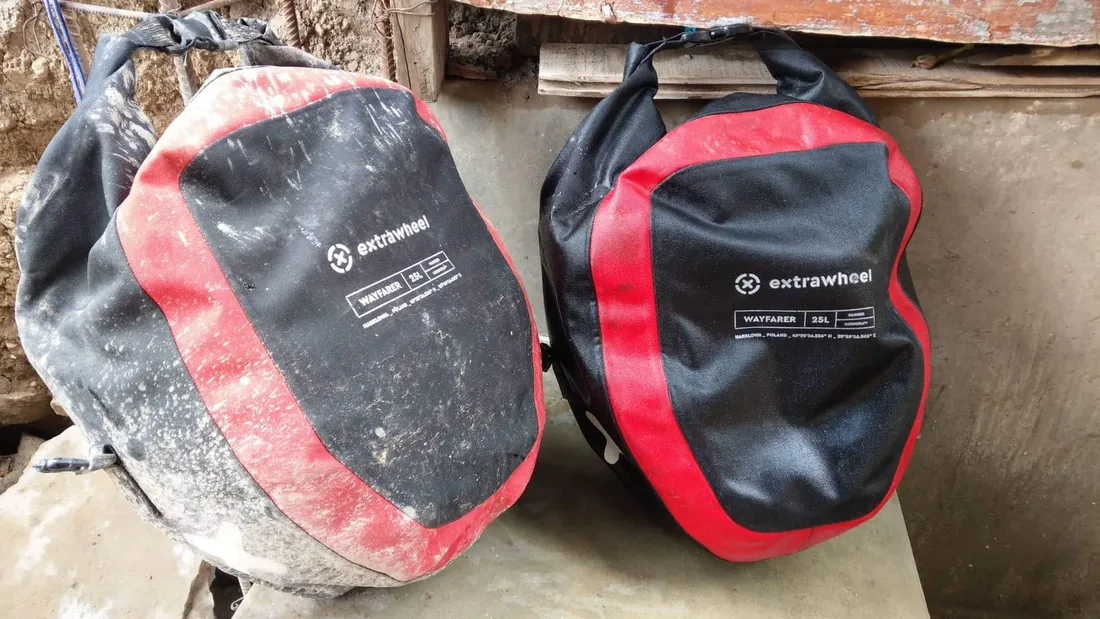
Grit trapped between the pannier and rack, together with loose mounting, can accelerate abrasion. Check pannier and bike rack compatibility and adjust the hooks correctly. Match worn components to the specific mounting system when selecting accessories and replacement parts. You can find broader advice in our pannier fitting, use and care guide.
A quick check before a wet ride
- The roll-top opening is clean and even, with enough room for all the required rolls.
- The buckles and straps hold the closure securely, with nothing caught in the opening.
- The fabric, joins and mounting points show no damage that needs repair.
- The pannier is securely attached and does not rub against sharp parts of the bike.
- Wet equipment is packed separately, and documents and electronics have additional protection.
Waterproof panniers: frequently asked questions
Do waterproof panniers need rain covers?
If the manufacturer specifies rain protection without a cover, a pannier in good condition and correctly closed does not need one within those stated conditions. An extra cover does not replace proper rolling or repair of a damaged compartment.
Are all CORDURA panniers waterproof?
No. CORDURA® is the name of a family of fabrics. A pannier's water protection depends on its coating or laminate, panel joins, closure and other construction details. The material name alone does not establish how the finished product protects against water.
How many times should I roll down an Extrawheel pannier?
For the Biker 50 L, Rider Premium 30 L and Wayfarer Premium 50 L models described here, roll the top down four times, fasten the buckles and compress the pannier as instructed. Check the individual instructions for any other model.
Can a roll-top pannier be submerged?
Only if the manufacturer of that specific model permits immersion and states the conditions. A roll-top closure or a claim of rain protection does not, by itself, confirm that the bag is suitable for use underwater.
Does a wet outer surface mean the pannier is leaking?
Not necessarily. A textile outer surface may be wet while the waterproof layer beneath it still protects the contents. A leak means water is entering the compartment; the appearance of the outer fabric alone does not establish this.
Will a water-repellent treatment fix a leaking pannier?
A water-repellent treatment will not repair a hole, a damaged coating, a damaged weld or failed seam sealing. Use care products appropriate for the specific material and follow the manufacturer's guidance. Damage causing a leak requires a suitable repair.
When choosing panniers for demanding tours, compare the stated conditions of water protection, the closure instructions and the options for servicing. We design and manufacture Extrawheel bicycle panniers in Harklowa, Poland. Our products are covered by a 5-year manufacturer's warranty, subject to the published warranty terms.
Prepared by Extrawheel, a Polish manufacturer of bicycle panniers and bags. Product details are based on Extrawheel's specifications for the models named above. The explanation of test parameters refers to ISO 811:2018 and IEC 60529.
 Polish
 German
 French