


Extrawheel Quality and Durability – Materials, Testing, Manufacturing in Poland and a 5-Year Warranty
What makes cycling equipment durable? Since 2005, Extrawheel has been developing products by combining design and manufacturing in Poland, proven European materials and components, laboratory data, controlled trials and experience from long-distance bicycle expeditions. We explain how we move from design and material selection to finished panniers, bike bags and dry bags – and why this process allows us to provide a 5-year manufacturer’s warranty.
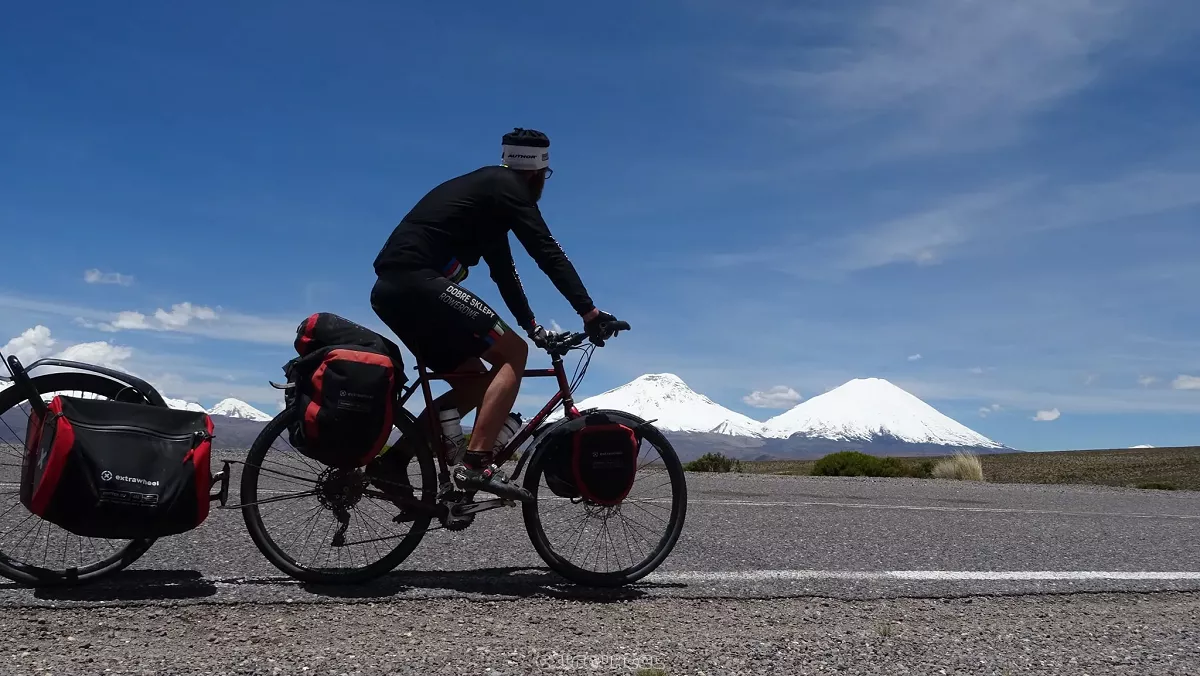
Quality in cycling equipment does not begin at the end of the production line, and it cannot be reduced to the name of a single fabric, one manufacturing technology or the length of a warranty. It starts much earlier – with product design, material and component selection, prototype development, controlled trials, manufacturing, real-world testing and analysis of how a product performs after successive seasons of use.
Extrawheel has been developing equipment for bicycle touring since 2005. For more than two decades, we have designed and manufactured bicycle trailers, bicycle panniers, bike bags, dry bags and components for bicycle luggage systems. We did not choose the easiest path. From the beginning, we invested in our own expertise, technologies and manufacturing in Poland. It was a more demanding route of development, but it allowed us to build our own know-how over the years and directly influence the quality of the products we make. Today, product design, development, manufacturing and quality control are still carried out in Poland.
The short answer: Extrawheel quality is built on more than 20 years of experience, proven materials and components, a European supply chain, manufacturing in Poland, controlled trials, laboratory data, real-world testing, experience from long-distance bicycle expeditions and information gained through servicing. Our 5-year manufacturer’s warranty is one result of this system – not its only element.
Extrawheel quality at a glance
| Brand experience | Since 2005 |
|---|---|
| Product design | Poland |
| Manufacturing | Harklowa, Lesser Poland, Poland |
| Materials and components | Proven suppliers from Poland and other European countries, including Germany |
| Manufacturing technologies | Including 3D HFW, sewing and seam protection – depending on product construction |
| Quality verification | Laboratory data for materials and components, controlled trials, prototypes and long-term use in real-world conditions |
| Field testing | Everyday use and long-distance bicycle expeditions in varied conditions |
| Service | Warranty and after-warranty service, plus selected spare parts |
| Manufacturer’s warranty | 5 years |
More information about the history, manufacturing and development of the brand is available on the About Extrawheel page.
More than 20 years of experience – why does 2005 matter?
In the outdoor industry, it is easy to describe a product as “proven”, “durable” or “built for adventure”. It is much more difficult to build product knowledge over more than two decades by observing successive generations of designs in manufacturing, everyday use, long-distance expeditions and service.
Since 2005, Extrawheel has evolved from specialised single-wheel bicycle trailers into a broader range of bicycle luggage equipment. Each product category presents different engineering challenges: load distribution, stability on the bicycle, material behaviour during intensive use, protection of luggage from water, ergonomics, adjustability and the possibility of servicing the product later in its life.
A manufacturer’s experience only has real value when information is fed back into the design process. User feedback, observations from expeditions, manufacturing experience and products returning for service after years of use help us determine which solutions should be developed further and which should be changed in the next generation.
That is why we treat quality as a process:
design → material → components → prototype → trials → field testing → manufacturing → quality control → use → service → analysis → development of the next design.
Quality starts with the design, not with the finished product
The durability of a bicycle pannier or bike bag depends on many elements working together. A highly durable fabric cannot compensate for a poorly designed mounting system. The best hooks will not solve a problem caused by geometry that is unsuitable for the intended use. Even a correctly executed weld cannot provide the required protection if the closure has been poorly designed.
For this reason, we analyse how a product will actually be used from the earliest design stage. A compact pannier for everyday use has different requirements from a large touring set, while a bikepacking bag attached directly to the frame or handlebar requires another set of design priorities.
Among the factors we consider are:
- intended load and luggage distribution,
- material type, construction and weight,
- type of coating or laminate,
- surface resistance to intensive use,
- the method used to join individual panels,
- the geometry of the base and corners,
- closure design and protection of the contents from water,
- the mounting system used on the bicycle or rack,
- adjustability and the possibility of replacing selected components,
- the manufacturing technology best suited to the material and product construction.
We discuss the technical aspects of cycling luggage construction in more detail in our Materials & Technology section.
Proven materials from European suppliers
At Extrawheel, material selection does not begin with the question of the lowest price. We first define the requirements of the design and the technical properties needed for its intended use.
We use proven technical materials and components sourced from European suppliers, including established German manufacturers. Many components, parts and production services also come from Poland. This supply model makes it easier to control specifications, maintain consistency between deliveries and work with suppliers when developing new products.
Depending on the product, we use materials including coated polyester fabrics, technical laminates and CORDURA®. We do not, however, assume that the name of a material alone is proof of the quality of a finished pannier or bag.
Two products made from apparently similar fabrics can have very different performance characteristics. What matters is the base fabric, the construction of the coating or laminate, material weight, consistency between production batches and how the material behaves during welding, sewing, folding and long-term use.
The material must match the application and manufacturing technology
There is no single material that is best for every product. Coated polyester can be an excellent choice for constructions that require easy cleaning and suitable properties for welding. CORDURA® can be used where low weight, a textile surface and resistance to intensive use are particularly important.
That is why we evaluate the material as part of a larger system:
fabric → coating or laminate → joining technology → construction → intended use.
The same principle applies to protection from water. A high performance rating for the fabric itself does not automatically mean that the complete product has exactly the same properties. Seams or welded joins, closure construction, mounting points and correct use are equally important.
We explain this subject in detail in our guide What Makes Bike Panniers Waterproof? How to Keep Your Gear Dry. This allows us to clearly distinguish the properties of the material from the performance of the complete product.
Components are just as important as the fabric
A bicycle pannier is a system. The body material may remain in very good condition for years, but comfort and secure use also depend on hooks, rails, adapters, webbing, buckles and lower retaining elements.
For this reason, our products use proven mounting solutions supplied by established cycling-industry brands, including Rixen & Kaul and Racktime/Tubus.
Depending on the model, we use either fixed or adjustable upper-hook positions. We do not consider one solution to be the best for every bicycle. A fixed system can be simple and effective when its geometry matches the rack, while continuous adjustment provides greater flexibility when positioning the pannier on different rack designs.
Before buying, it is therefore worth checking not only the diameter of the rack tube, but also the hook spacing, the amount of clear rail space, the position of rack stays and whether the lower retainer can be positioned correctly. We explain this in detail in Will Bicycle Panniers Fit Your Bike Rack? Compatibility & Mounting Systems.
Laboratory data – parameters should be measured, not guessed
The appearance of a material does not reveal all of its properties. When selecting materials and components, we therefore use technical documentation and available laboratory test results provided by suppliers.
Depending on the material or component, the documentation may include mechanical properties, coating or laminate characteristics, resistance to water, lightfastness and other parameters relevant to a particular application.
These data help us compare materials before manufacturing begins. They do not, however, replace the need to assess how the material behaves after processing and as part of the finished construction.
That is why we also carry out controlled technological trials during product development. We check how the material behaves during processing, whether the required joint can be achieved, the geometry of individual elements, the performance of components and the repeatability of the process.
A fabric test, a joint test and a finished-product test answer different questions. If a particular parameter has been measured for a material or individual component, we do not automatically attribute the same result to the complete pannier.
This distinction is particularly important when making statements about protection from water. A coating parameter, a weld test and the performance of a complete product in the rain describe different aspects of the same construction.
Controlled trials and product testing
Laboratory testing makes it possible to isolate a specific parameter, but cycling equipment works as a complete system. The next stage is therefore to evaluate the construction in conditions that are as close as possible to real use.
Trials can reveal issues that may not be visible at the design stage: how the material behaves when loaded, how the mounting system works under vibration, whether a buckle can be operated while wearing gloves, how convenient the roll-top closure is to use, or how the lower retainer behaves on uneven roads.
A good test is not intended to prove that the designer was right. Its purpose is to find a weak point before the user does.
3D HFW – technology is a tool, not the objective
Selected Extrawheel constructions use 3D HFW high-frequency welding. This technology allows compatible thermoplastic materials to be joined without conventional stitching in the main welded areas of the construction.
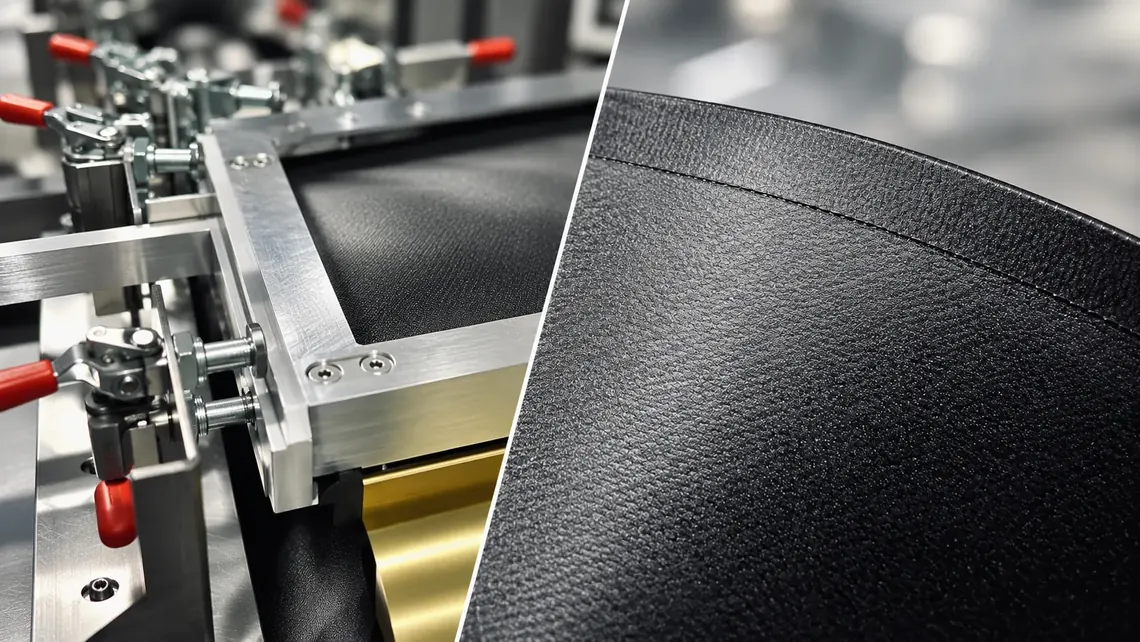
The quality of a joint does not, however, result simply from using an HFW machine. The material and its coating, electrode geometry, joining area, process energy, pressure, time and cooling all matter.
This is why introducing a new construction requires the material, design, tooling and process parameters to be matched to one another.
We also do not use 3D HFW where another manufacturing method is more appropriate. Some products are sewn, with seams protected where required. The manufacturing technology should follow the function of the product – not the other way around.
We explain the process in more detail in HFW Welding in Bicycle Panniers – How It Works and Why It Matters.
A prototype has to leave the workshop
Even a well-designed product should not be assessed solely on a workbench. A bicycle moves, vibrates, accelerates and brakes. Luggage shifts, while the user repeatedly removes the pannier, fits it again, opens it, closes it and rolls the closure.
On the road, other factors also occur that are difficult to reproduce simultaneously during a short trial: dust, mud, rain, sunlight, large temperature changes, vibration and many hours under load.
A prototype therefore needs to be mounted on a bicycle, loaded and used in conditions that reflect its intended purpose.
A laboratory can isolate a parameter. The road tests the complete system.
Field testing – what cannot be learned in a single day?
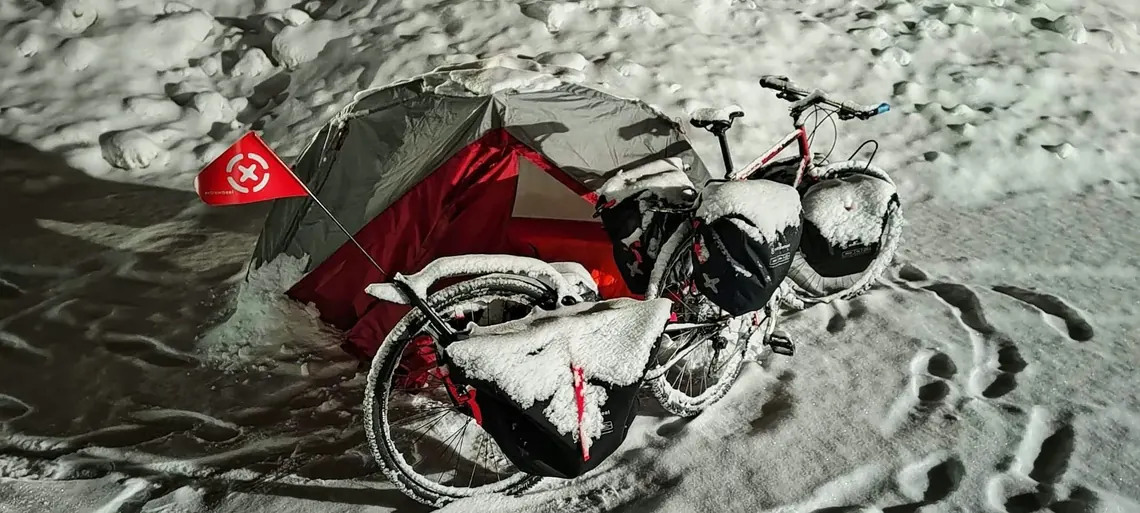
Long-term use is particularly valuable for a manufacturer of expedition and touring equipment. It does not last for just a few hours and does not end after a short test ride.
During a multi-day or multi-month expedition, the product is loaded every day, removed, mounted again, opened and closed. It works during climbs, fast descents, on asphalt, gravel and uneven surfaces.
This type of use makes it possible to observe not one isolated parameter but the interaction of the complete system: the body, mounting system, closure, buckles and adjustment components.
Damian Drobyk – thousands of kilometres with Extrawheel products since 2010
We place particular value on the experience of Damian Drobyk, who has been using Extrawheel products on his bicycle expeditions since 2010.
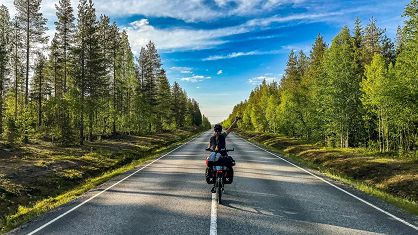
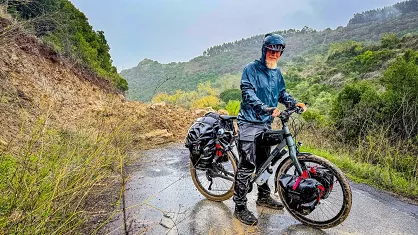
This is not a single test or a short promotional collaboration. Over the years, his routes have crossed different continents, deserts, mountains, high passes, long gravel sections and roads located several thousand metres above sea level.
Such expeditions create a form of long-term field evaluation. Equipment is used for many weeks, often far from service facilities and without the possibility of easily replacing it. This is when design details that may remain invisible during a short test become particularly important.
Andes Expedition 2025 – 5,890 km in the high Andes
One of the most demanding examples was the Andes Expedition 2025 through Peru, Bolivia, Chile and Argentina.
Over 92 days, Damian covered 5,890 km and approximately 105,000 metres of elevation gain. The route included 82 major climbs, 61 of them above 4,000 metres and four above 5,000 metres. The highest point of the expedition was 5,082 metres above sea level.
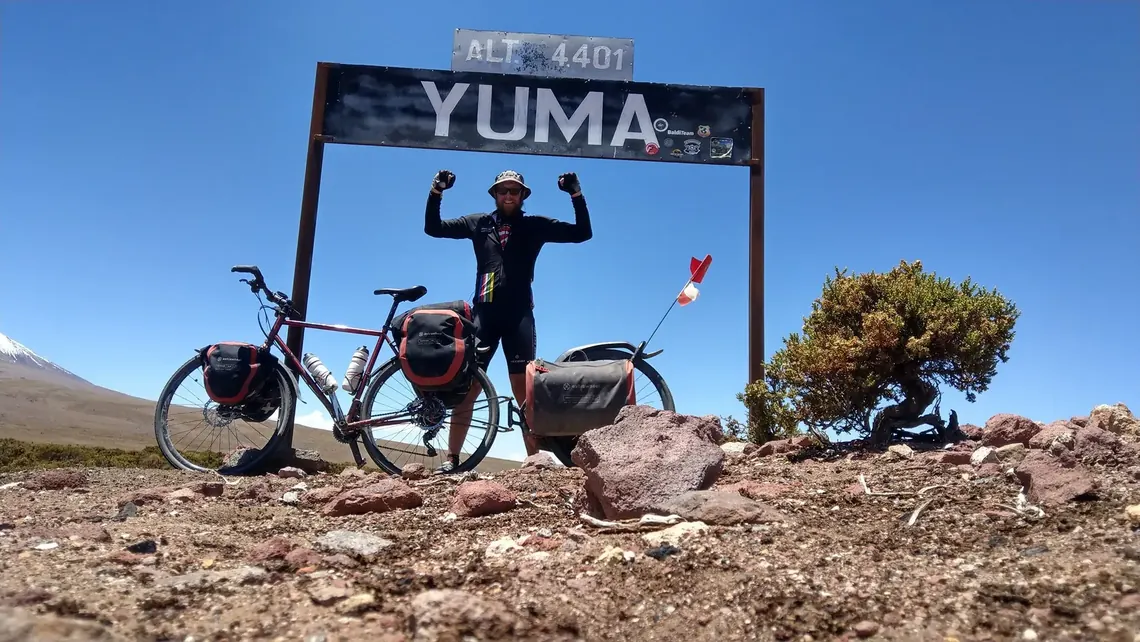
Conditions like these cannot be fully reproduced during a one-day test. Long-term vibration, daily loading of mounting components, dust, intense solar radiation, low temperatures at high altitude and thousands of kilometres of riding reveal how equipment performs over an entirely different timescale.
We do not treat expeditions as a substitute for laboratory testing or controlled trials. Their role is different – they show how the complete product behaves during prolonged, real-world use.
Japan – another example of long-term use
Expedition experience is not limited to one continent. During Japan Expedition 2023, Damian covered 2,462 km over 28 days, including numerous mountain sections and climbs in the Japanese Alps.
Changing weather conditions, multi-day stages and daily use of the luggage system provide information that cannot be obtained solely through a short product inspection.
It is the repetition and variety of these experiences that make them particularly valuable to us. A single expedition may reveal a specific issue. Many years of use make it possible to understand product behaviour over a much longer period.
The clearest picture of quality comes from several sources of information
There is no single test that can answer every question about the durability of cycling equipment. That is why we build our product knowledge from several layers:
- technical documentation for materials and components – providing measurable parameters,
- laboratory test results for materials and components – supplied by manufacturers and suppliers and used to assess specific properties under controlled conditions,
- technological trials – showing how materials behave during the actual manufacturing process,
- prototypes – allowing improvements to be made before series production,
- user testing – showing how the product works on the bicycle,
- long-distance expeditions – providing information from weeks or months of continuous use,
- production quality control – required to maintain consistency of workmanship,
- service feedback – showing how products actually wear after successive seasons.
None of these sources replaces all of the others. Their value lies in the way they complement one another.
Manufacturing in Poland helps turn experience into product improvements faster
For Extrawheel, manufacturing in Poland is not only part of the brand’s communication. It also matters from the perspective of product development and quality control.
The short distance between design, prototype development, manufacturing technology and series production allows us to evaluate new solutions more quickly. If we change a construction detail, assembly method or process parameter, the result can be assessed directly during manufacturing.
Quality control is not limited to the appearance of the finished product. The quality of joints, correct installation of mounting systems, operation of adjustment components and buckles, closure construction and conformity with the intended design all matter.
“Made in Poland” means, for us, the ability to directly influence the way a product is manufactured. This is why we have spent years developing our own manufacturing expertise rather than limiting ourselves to product design and outsourcing the finished product.
Quality control does not end after the sale
Product knowledge does not end when equipment leaves the production facility. Some of the most valuable information only becomes visible after several years of use.
A product returning for service reveals actual areas of wear, the way mounting components work over time, the effects of repeated opening and closing and the influence of the conditions in which it has been used.
This is why service is also a source of information for product development. It helps distinguish an isolated case from a recurring issue and allows us to determine whether a future version should use a different material, component, assembly method or geometry.
Repairability is also part of durability
A durable product does not mean a product in which no component will ever wear out. In equipment used intensively for many years, wear of the most heavily loaded or repeatedly moving components is natural.
The more important question is:
Does wear of one component mean that the entire product has to be replaced?
In many Extrawheel products, selected hooks, adapters and mounting-system components can be replaced separately. Available components can be found in our Extrawheel accessories and spare parts category.
This is particularly important for touring equipment. If the body of a pannier is still fully functional, wear of a single hook after years of use should not automatically mean replacing the complete set.
The 5-year manufacturer’s warranty is the result of the complete system
Extrawheel provides a 5-year manufacturer’s warranty covering manufacturing defects, with no product registration required.
We do not, however, treat the length of the warranty itself as proof of quality. A warranty has real value when it is backed by a manufacturer with knowledge of the product’s construction, the ability to assess a problem, manufacturing experience and service capabilities.
The 5-year warranty can therefore be viewed as the result of the complete process:
more than 20 years of experience → our own know-how → proven materials → European suppliers → design in Poland → prototypes → laboratory data → controlled trials → field testing → manufacturing in Poland → quality control → service → spare parts.
The scope of the warranty, claim procedure and information about warranty and after-warranty service are available on the Warranty & Service page.
How can you assess the quality of bicycle panniers yourself?
When comparing panniers from different manufacturers, it is worth looking beyond any single parameter. Price, material name, weight or a waterproofing claim only describe part of the construction.
Several factors should be considered together:
- material – what the fabric is made from and which layer provides protection from water,
- manufacturing technology – whether the construction is welded, sewn or combines several joining methods,
- mounting system – its adjustment range and whether it can be correctly matched to the particular rack,
- closure – how it works and what is required for correct use,
- service – whether support remains available after purchase,
- spare parts – whether selected components can be replaced instead of the entire product,
- manufacturer experience – whether designs are developed on the basis of real-world use,
- warranty – who provides it, how long it lasts and what it actually covers.
If you are still choosing the model, capacity and material, start with our guide How to Choose Bicycle Panniers. If you already have a particular rack, the next step should be to check pannier-to-rack compatibility.
Quality also depends on correct use
Even a very durable product can be damaged through incorrect installation, overloading or contact with the wheel. Responsible product design therefore also includes providing users with the information they need to use the equipment correctly.
A pannier should be securely mounted, the lower retainer correctly positioned and the load distributed within the limits of the bicycle and rack. Mounting components and other working parts should also be checked regularly.
Practical information about installation, use, cleaning and storage can be found in our FAQ – Fitting and Using Bicycle Panniers, Dry Bags and Handlebar Bags.
What does product durability mean in practice?
For us, durability does not mean promising that a product will never wear out. It means designing for many years of use, selecting the right materials and components, controlling the manufacturing process and making repair possible where it is technically justified.
It also means being prepared to analyse what happens to a product after the sale. If real-world use or service reveals an opportunity to improve the construction, that information should return to the design process.
This is why experience measured in years only matters when it leads to product development.
Quality that can be proven over time
After more than 20 years, we know that there is no single solution suitable for every cyclist. Different applications require different capacities, materials, mounting systems and constructions.
What remains consistent is the way we think about the product: it should be designed for a specific task, made from appropriate materials and components, checked before production and observed as it continues to work on a user’s bicycle over successive seasons.
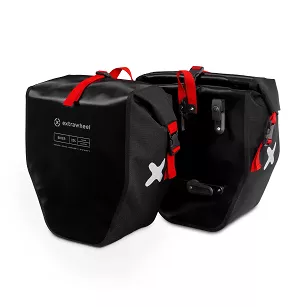
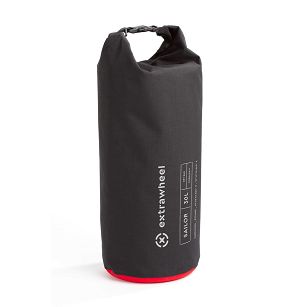
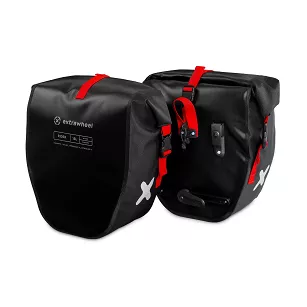
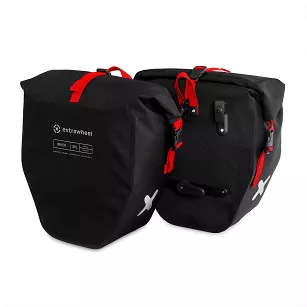
If you are looking for equipment for everyday riding or a multi-day tour, see Extrawheel bicycle panniers. When building a more extensive luggage system, also explore our bike bags and dry bags manufactured by Extrawheel in Poland.
From design, materials, components and manufacturing to thousands of kilometres on the road – this is how we understand quality and durability at Extrawheel.
Frequently asked questions about Extrawheel quality and durability
How long has Extrawheel been manufacturing cycling equipment?
Extrawheel has been developing bicycle touring equipment since 2005. More than 20 years of experience includes the design, manufacturing and development of successive generations of bicycle trailers, panniers, bike bags, dry bags and luggage systems.
Where are Extrawheel panniers and bike bags manufactured?
Extrawheel is a Polish manufacturer. The company’s headquarters and production facility are located in Harklowa, Lesser Poland, Poland. Extrawheel products are designed and manufactured in Poland.
Why does Extrawheel manufacture in Poland?
Since the beginning, we have developed our own expertise, technologies and manufacturing processes in Poland. This allows us to directly influence how products are made, test construction changes more quickly and use experience gained from manufacturing, real-world use and servicing when developing subsequent product generations.
Where do Extrawheel materials and components come from?
We work with proven suppliers from Poland and other European countries, including Germany. When choosing a material or component, we consider its technical properties, consistency, compatibility with our manufacturing technology and the intended use of the finished product.
Does Extrawheel use laboratory test data?
When selecting materials and components, we use their technical documentation and available laboratory test results provided by suppliers. We distinguish data relating to a material or individual component from the performance of the complete finished product. During development, we also carry out controlled technological and user trials.
Does Extrawheel test products in real-world conditions?
Yes. Prototypes and product constructions are also evaluated during real-world use. Another source of knowledge is the experience of cyclists using Extrawheel products on long-distance expeditions, including the long-term experience of Damian Drobyk.
Can expedition testing replace laboratory testing?
No. The two types of information answer different questions. Laboratory testing allows a specific parameter to be measured under controlled conditions, while long-term real-world use shows how the complete product behaves in changing conditions. The most useful approach is to combine both sources of information.
Are all Extrawheel products welded using 3D HFW?
No. We use 3D HFW in selected constructions where the material and design allow the technology to be used effectively. Other products may be sewn, with seams protected where necessary. We select the manufacturing technology according to the material, construction and intended use of the product.
Why does Extrawheel provide a 5-year manufacturer’s warranty?
The 5-year warranty is part of a broader system that includes product design, material and component selection, manufacturing in Poland, quality control, testing and service. The manufacturer’s warranty covers manufacturing defects subject to its terms and does not require additional product registration.
Can Extrawheel products be repaired after the warranty has expired?
In many cases, yes. Extrawheel also provides after-warranty service where the construction of the product and the type of damage make repair technically possible. Selected hooks, adapters and other spare parts are also available for certain models.
How should I choose durable bicycle panniers?
A pannier should not be judged solely by the name of its material. It is also worth checking the construction, joining technology, closure, mounting system, compatibility with the rack, manufacturer experience, access to service and whether selected components can be replaced later.
About the author
Radosław Rakoczy – co-owner of Extrawheel Sp. z o.o., involved in the development of the brand’s products and manufacturing processes. His work includes material and component selection, product development, implementation of manufacturing technologies and the development and refinement of the Extrawheel product range.
Basis of this article: more than 20 years of Extrawheel experience in designing and manufacturing cycling equipment, technical documentation for materials and components, manufacturing and service experience, and published reports from long-distance bicycle expeditions.
 Polish
 German
 French