


Bicycle Panniers or a Handlebar Bag? Choosing Luggage for Day Rides and Touring
Handlebar bag or bicycle panniers? The right choice depends less on distance than on how much you carry, how heavy it is, where the luggage can be mounted and how often you need access to your belongings. We explain when a compact handlebar bag is enough, when 25–30 L panniers make more sense, when a 50 L set becomes useful, and why combining both can be the most practical setup for cycle touring.
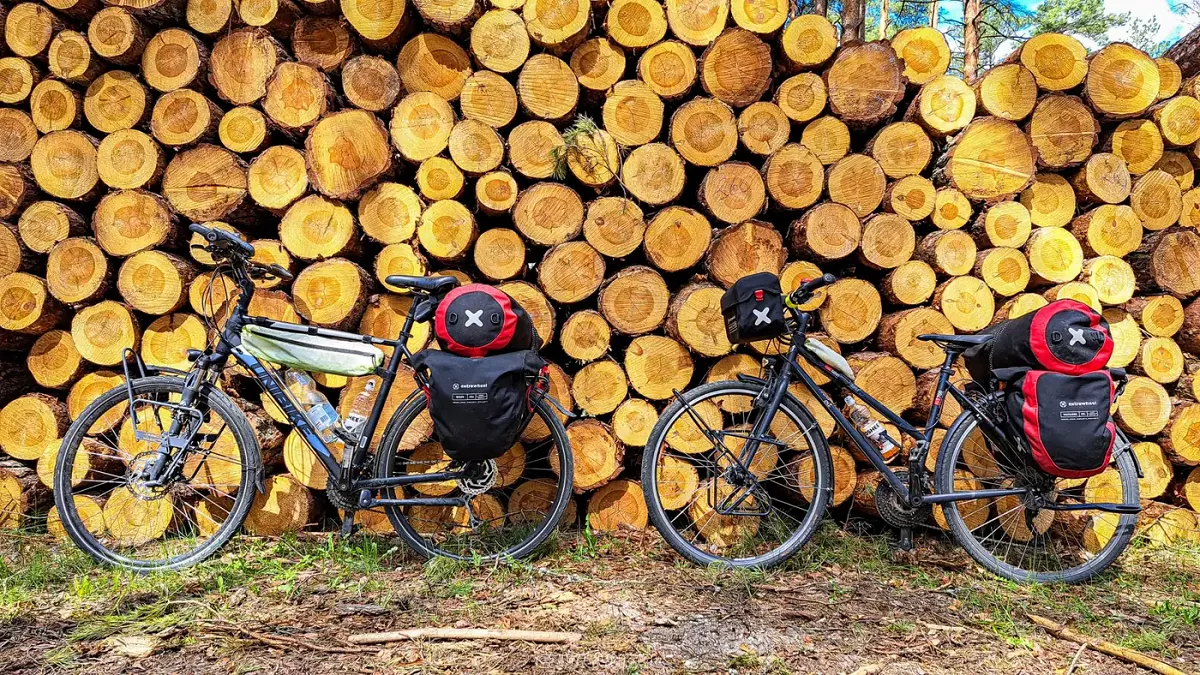
Handlebar bag or bicycle panniers? There is no single answer that works for every ride. If you are carrying a phone, documents, snacks and a lightweight jacket, a compact bag at the front of the bike may be all you need. Once you add spare clothing, more food, shopping or overnight equipment, bicycle panniers become a much more practical option.
On longer rides, the two solutions do not have to compete with each other. Panniers can carry the main load, while a handlebar bag keeps smaller items organised and easy to reach when you stop.
The short answer: a small amount of lightweight luggage favours a handlebar bag. Greater volume and heavier equipment favour panniers. For cycle touring, combining both can be one of the most practical luggage setups.
Bicycle panniers or a handlebar bag – quick comparison
| What do you need? | Handlebar bag | Bicycle panniers |
|---|---|---|
| Small personal items | Very practical | Usually more capacity than you need |
| Phone, documents and snacks | Convenient access when you stop | They can carry them, but they are less convenient for frequent access |
| Clothing, shopping and more food | Capacity may become limiting | Usually the better choice |
| Overnight equipment | Best used as part of a larger setup | Main luggage capacity |
| Requires a bicycle rack | No | Yes – a compatible rack is required |
| Weight carried on the handlebars | Yes – especially noticeable with heavier loads | The load is carried beside the rack |
The most important question is therefore not simply “how many kilometres am I riding?”, but what am I actually taking with me and how much does it weigh? A family heading out for a few hours may carry more equipment than one rider spending a weekend away with indoor accommodation.
When is a handlebar bag the best choice?
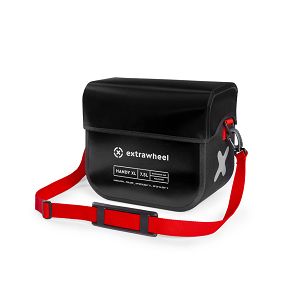
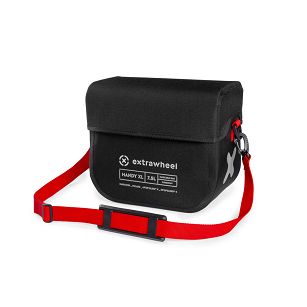
A handlebar bag is primarily a place for smaller items that you want to keep organised and easy to take with you when you stop.
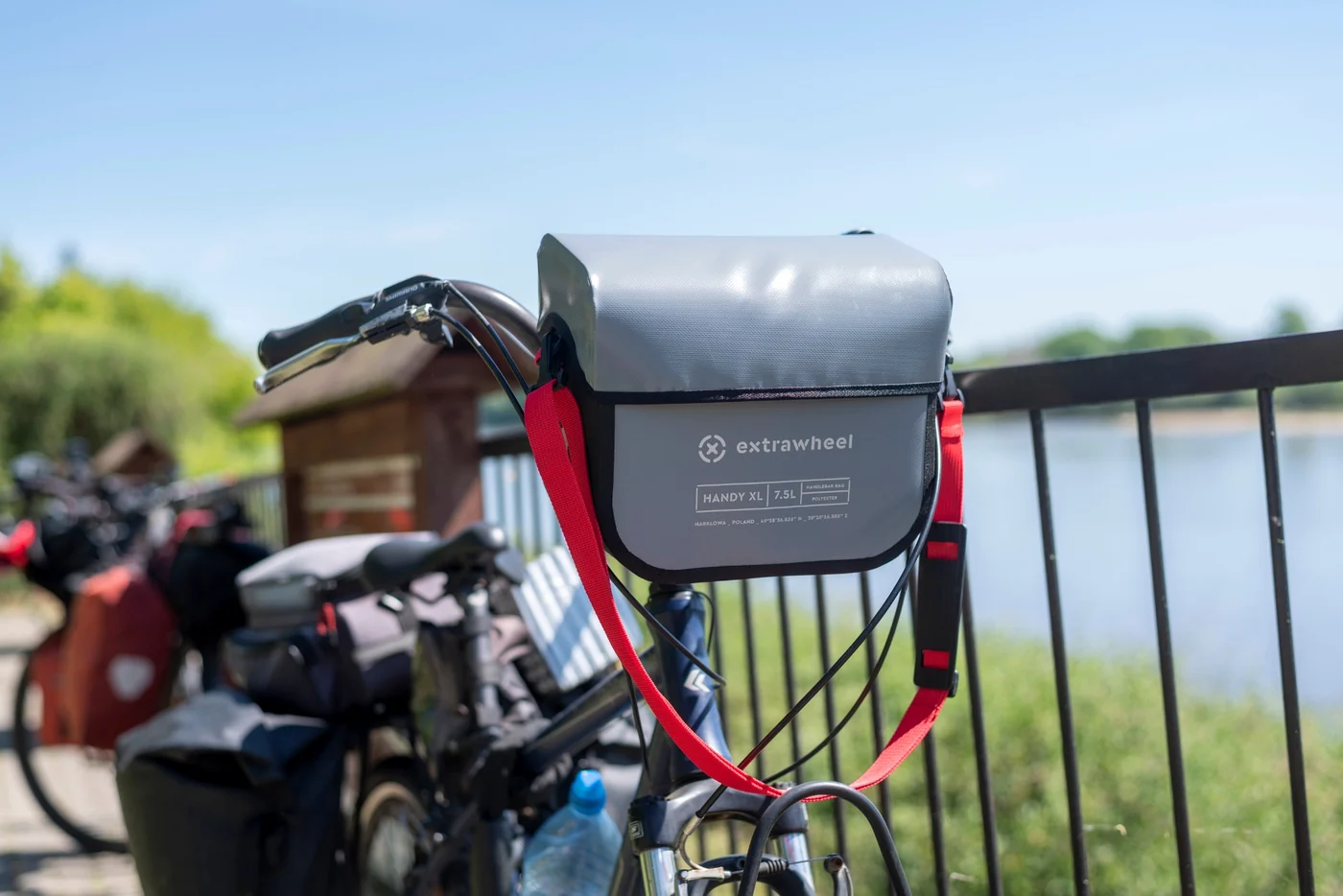
Typical items include:
- phone and documents,
- keys and wallet,
- snacks,
- glasses,
- a compact camera,
- a lightweight jacket or other small clothing items.
If everything fits comfortably without forcing the contents inside or preventing the bag from closing correctly, there is no reason to take a larger luggage system simply because you are planning to ride all day.
From a practical point of view, one of the main advantages of a handlebar bag is organisation. When you stop, you do not have to search through your main luggage simply to find your wallet, phone or a snack.
What should you check before fitting a handlebar bag?
Space in front of the handlebars can be limited. This is particularly important on bikes with drop handlebars and on e-bikes fitted with a display, cables and additional accessories.
Once the bag is fitted:
- the handlebars should retain their full steering range,
- the bag should not press against cables or hoses,
- it should not obscure a light or display,
- the load limits of the bag, bracket and handlebars must all be respected.
Heavy objects are not automatically suitable for a handlebar bag simply because they physically fit inside it. Extra weight at the front of the bike can be noticeable when steering and manoeuvring.
When are bicycle panniers the better choice?
Panniers start to make more sense once your luggage clearly exceeds a typical collection of personal items. Spare clothing, larger shopping loads, more food, overnight gear or camping equipment are easier to distribute between bags mounted on either side of a compatible rack.
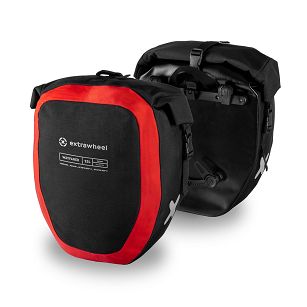
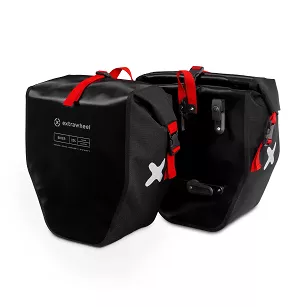
That does not mean every ride requires a 50 L touring set. For commuting, shopping and shorter trips, compact sets of around 25–30 L can be much more appropriate. The current Extrawheel range includes both compact 25–30 L pannier sets and larger 50 L models for riders carrying significantly more luggage.
When do 25–30 L panniers make sense?
A smaller pair can be an excellent middle ground when a handlebar bag is no longer large enough but you do not need a full-size touring setup.
For example:
- Rambler 25 L consists of two 12.5 L panniers,
- Rider 30 L consists of two 15 L panniers.
These capacities can be enough for clothing, food, light shopping and basic equipment without carrying a large touring set.
Because each pannier has its own mounting system, one bag can also be used on its own when less capacity is required. With heavier loads, however, it is generally better to distribute the weight between both sides rather than concentrating it all on one side of the bicycle.
When does a 50 L pannier set become useful?
More capacity becomes particularly useful for trips with overnight stays, camping equipment or situations in which one rider is carrying equipment for several people.
Biker 50 L has a total capacity of 50 L, with two separate 25 L panniers.
This does not mean that every multi-day trip requires 50 litres. Indoor accommodation, the possibility of washing clothing or buying food along the way can reduce the amount of space you need considerably. It is better to prepare your equipment first and choose the luggage capacity afterwards.
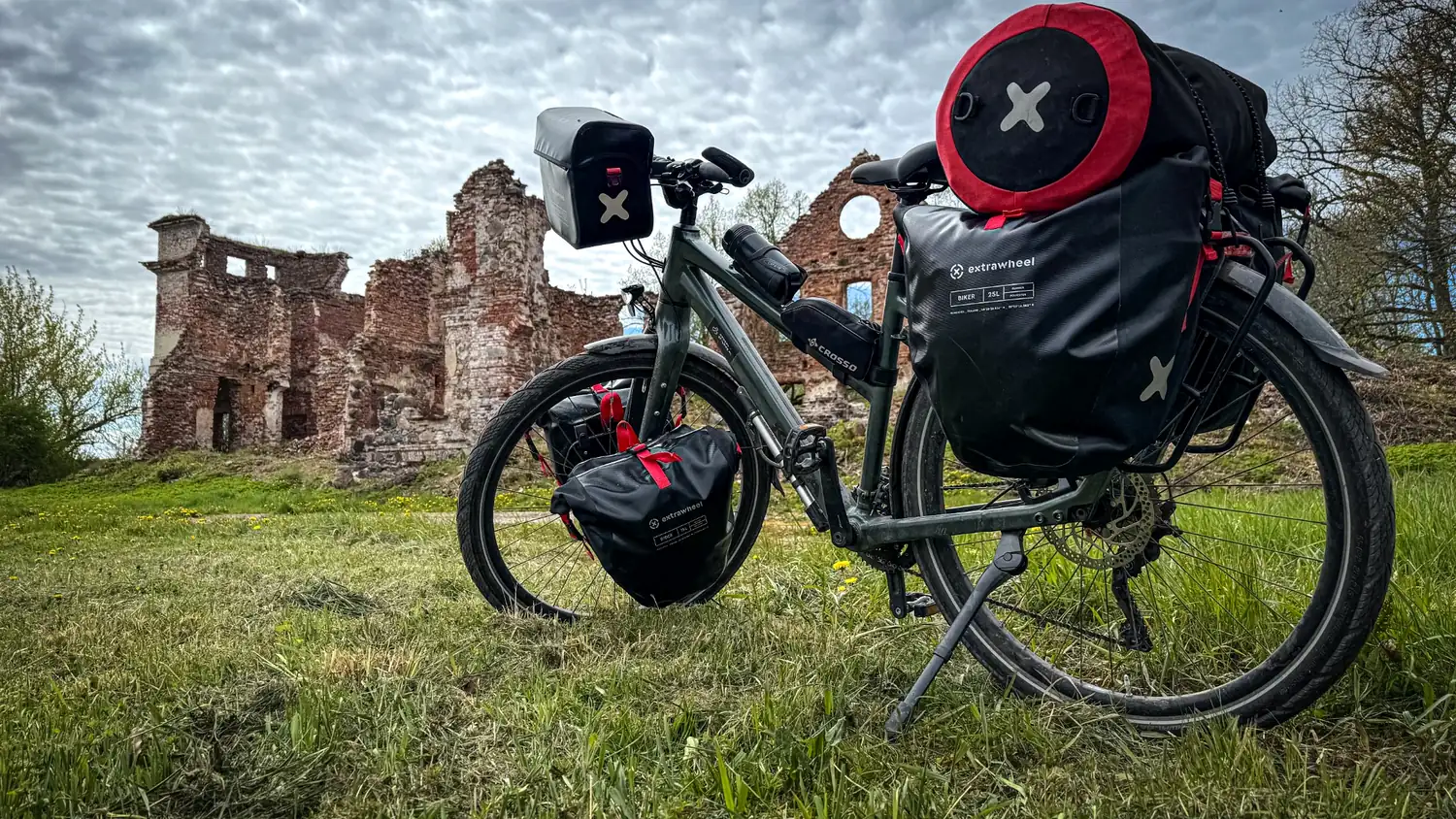
For a more detailed comparison of pannier capacities, materials and intended uses, see our guide Which Bicycle Panniers Should You Choose?.
5, 25 or 50 litres? First check what the stated capacity actually means
One of the easiest mistakes to make when comparing bicycle luggage is to compare the capacity of one individual bag with the total capacity of a pair of panniers.
| Luggage type | Total capacity | Capacity of one bag |
|---|---|---|
| Handlebar bag | e.g. 5–7.5 L | 5–7.5 L |
| Extrawheel Rambler | 25 L | 12.5 L |
| Extrawheel Rider | 30 L | 15 L |
| Extrawheel Biker | 50 L | 25 L |
A label such as “50 L” on a pannier set does not therefore mean that each bag holds 50 litres. In the case of Biker, the figure is the combined capacity of two 25 L panniers.
Capacity in litres does not tell the whole story either. An unusually shaped object may not fit even when the nominal volume appears sufficient. External and internal dimensions, closure design and the space required to close or roll the bag correctly also matter.
Using panniers and a handlebar bag together – often the best touring setup
When you are carrying more equipment, you do not necessarily have to choose one system or the other. In cycle touring, it is often useful to divide your luggage according to how frequently you need to access it.
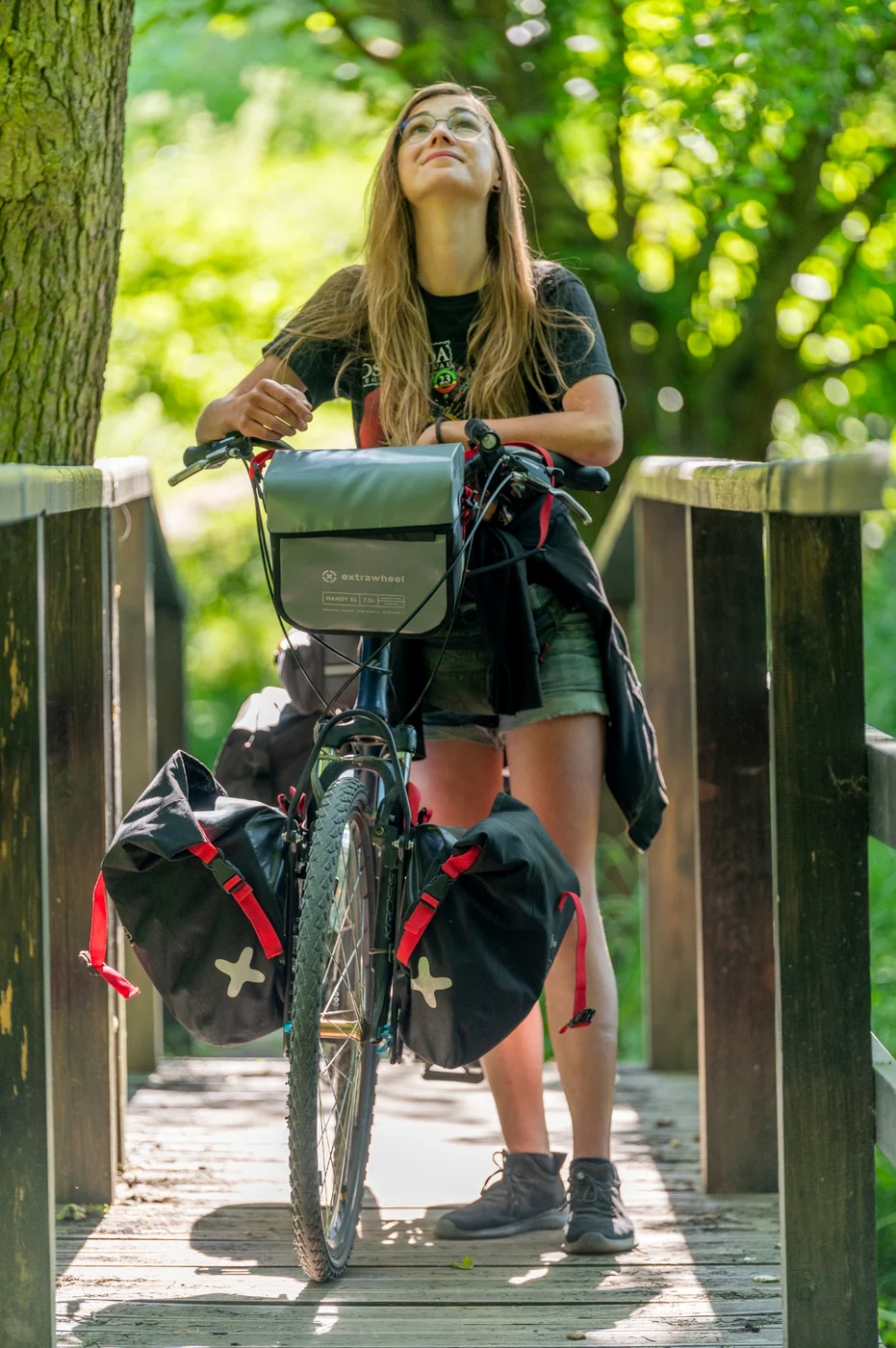
In the panniers:
- clothing,
- camping equipment,
- a larger food supply,
- items needed only at the end of the day.
In the handlebar bag:
- documents,
- phone,
- snacks,
- glasses,
- small items needed during stops.
This means you do not need to open your main panniers every time you stop briefly. The handlebar bag becomes part of the complete luggage system rather than a replacement for the panniers.
How should you choose a luggage setup for different types of ride?
A short ride with only a few essentials
If you are carrying a phone, documents, food and a lightweight emergency layer, start by checking whether a handlebar bag is enough. It is the simplest solution and may provide all the capacity you need.
A full day away from home or a larger shopping trip
If clothing, food or shopping starts to exceed the capacity of your small personal luggage, 25–30 L panniers may be more practical. There is no need to move straight to the largest touring set.
A weekend trip with indoor accommodation
With a reduced packing list, a smaller pannier set can often provide enough capacity. A handlebar bag can complement it by keeping smaller items easy to access.
A camping trip or multi-day bicycle tour
In this case, the capacity you need depends mainly on the volume of your sleeping bag, tent, clothing, cooking equipment and food. Larger panniers can carry the main equipment, while the handlebar bag keeps smaller personal items separate.
Once you have chosen the capacity, think carefully about how the load will be distributed. Our guide How to Pack Bicycle Panniers Properly explains how to position heavy items, balance the load and organise equipment for easier access.
Mounting compatibility matters just as much as capacity
Even the ideal luggage capacity will not help if the pannier does not fit your rack or the handlebar bag interferes with the controls at the front of the bicycle.
For panniers, rack-tube diameter is only one of several factors. You should also check:
- the spacing or adjustment range of the upper hooks,
- the length of unobstructed rack tube available for mounting,
- space for the lower retaining hook,
- clearance from the wheel,
- heel clearance while pedalling,
- the rack's maximum permitted load.
Our guide Will Bicycle Panniers Fit Your Bike Rack? explains how to measure and check these points step by step.
What about protecting your luggage from rain?
The mounting position alone does not determine how well a bag protects its contents from water.
The important factors are the material and its coating or laminate, the way the panels are joined, the closure design and correct use of the complete product.
A bag described as water-resistant should not automatically be treated as suitable for immersion. Likewise, a pannier described as waterproof must still be closed according to the manufacturer's instructions to provide the stated protection.
We explain the difference between fabric properties and the waterproof performance of the complete bag in our guide What Makes Bike Panniers Waterproof?
Five things to do before your first ride with luggage
- Lay out everything you actually plan to take. It is much easier to judge the real volume when the equipment is in front of you.
- Weigh the heavier items. Capacity in litres and permitted load are two different specifications.
- Check the mounting system on the actual bicycle. This applies to both the rack and the available space around the handlebars.
- Load the bicycle as it will be used on the road. Make sure nothing touches the wheel or interferes with pedalling, braking or steering.
- Take a short test ride. A few minutes with the real load can quickly reveal problems with weight distribution or mounting stability.
FAQ – bicycle panniers or a handlebar bag?
Which is better for a day ride: panniers or a handlebar bag?
If you are carrying only a small amount of personal luggage, a handlebar bag may be completely sufficient. If you need spare clothing, more food or items for several people, compact 25–30 L panniers can be more practical.
Can I use bicycle panniers and a handlebar bag at the same time?
Yes. This is a practical arrangement for longer rides: the panniers carry the main equipment, while the handlebar bag holds smaller items needed during stops. The permitted load limits of all components still need to be respected.
Does a 25 L pannier set mean 25 L on each side?
Not necessarily. Always check whether the manufacturer is quoting the capacity of one pannier or the complete set. For example, Extrawheel Rambler 25 L consists of two 12.5 L panniers.
Can I use just one pannier for a short ride?
Yes, provided the model uses independently mounted panniers. For heavier luggage, however, distributing the load between both sides can improve balance and handling.
Does a handlebar bag require a luggage rack?
No. A handlebar bag uses its own mounting system at the front of the bicycle. You still need to check bracket compatibility, available space, cable routing and the permitted load of the handlebars and mounting system.
Summary – handlebar bag or bicycle panniers?
A handlebar bag works best for small personal items that you want to keep organised and easy to reach. Bicycle panniers are more practical when you are carrying more clothing, food, shopping or overnight equipment.
Do not choose solely according to the length of the ride. Start by considering the volume and weight of what you actually plan to carry, then check how and where that luggage can be mounted safely on your bicycle.
For a longer tour, the two systems can complement each other extremely well: the panniers carry the main load, while the handlebar bag keeps frequently used items within easy reach when you stop.
If you are comparing different ways of carrying luggage by bicycle, explore our full range of bike bags and Extrawheel bicycle panniers.
About the author
Radosław Rakoczy – co-owner of Extrawheel, involved in the development and manufacture of bicycle panniers and bike bags, technical-material selection, mounting systems and luggage solutions for cycle touring.
 Polish
 German
 French