


HFW welding in bicycle panniers – how it works and why it matters
High-frequency welding (HFW) joins compatible thermoplastic materials without conventional stitching in the welded areas. We explain how the process works, what determines weld quality and which Extrawheel panniers use HFW construction.
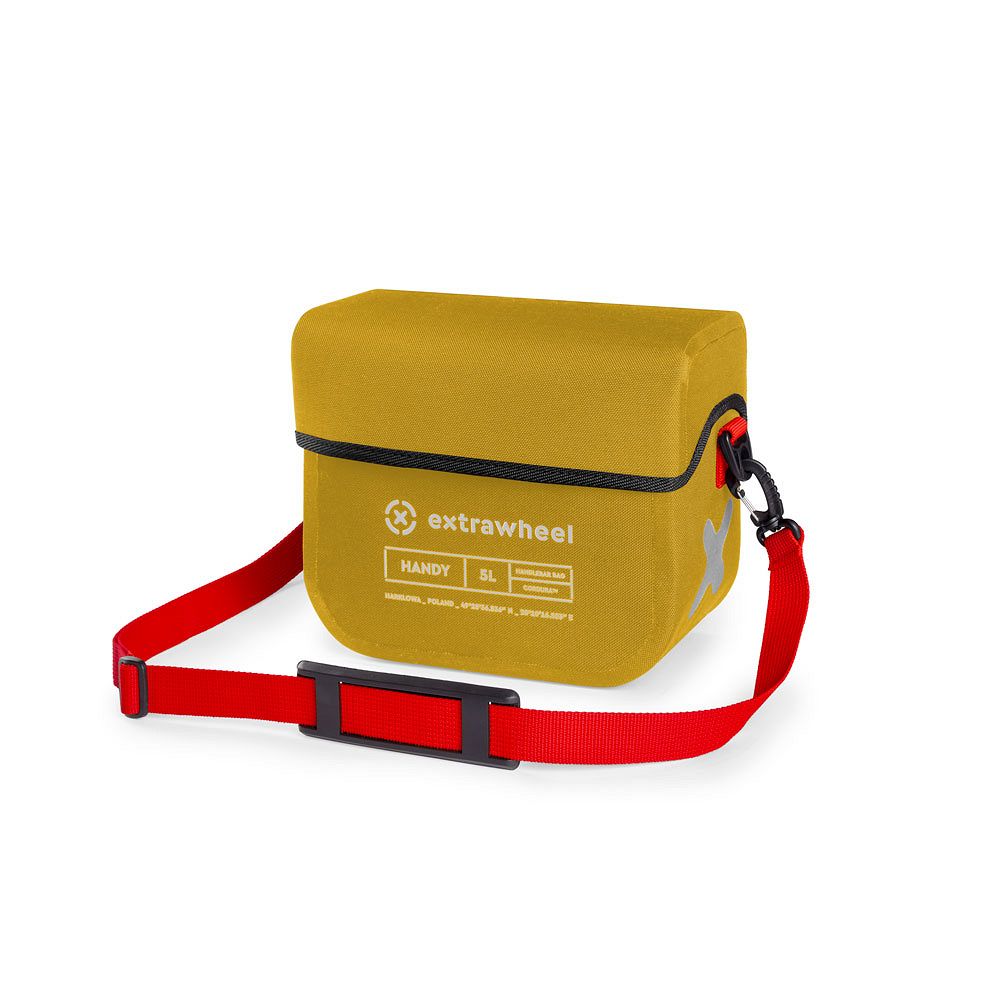
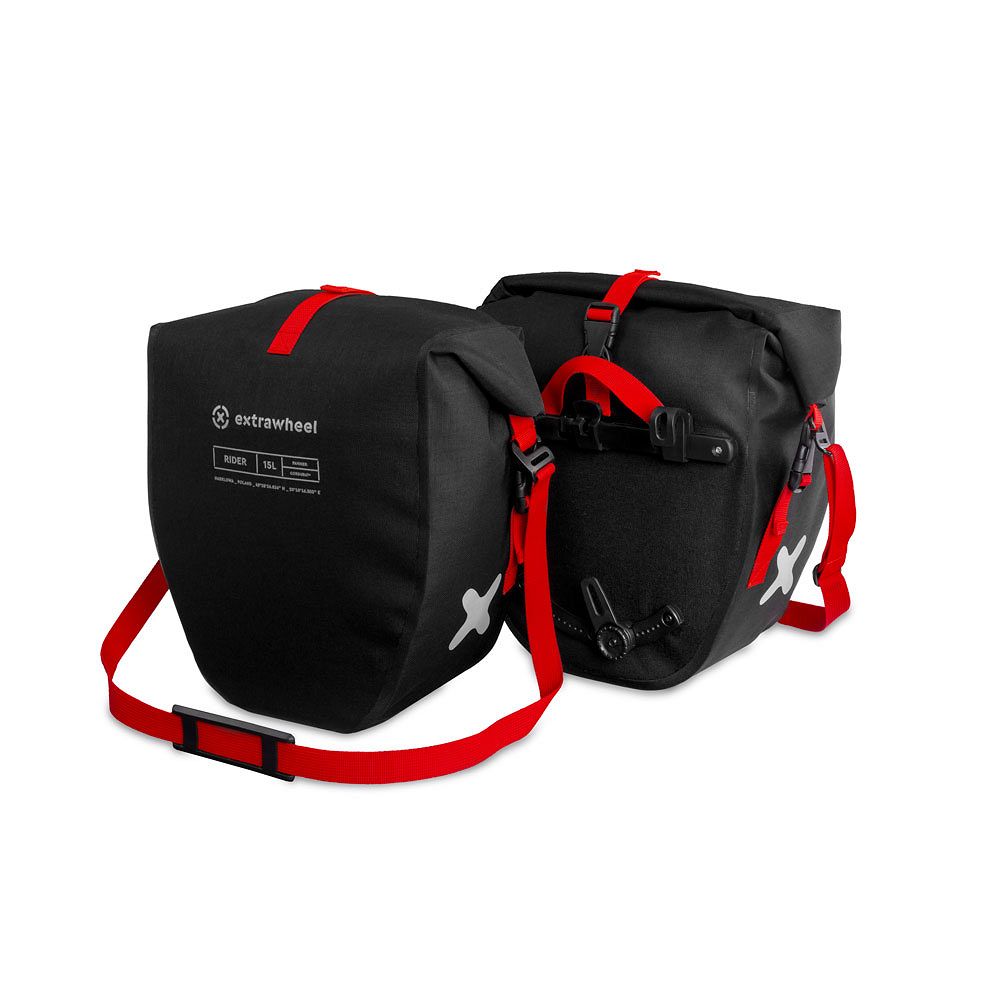
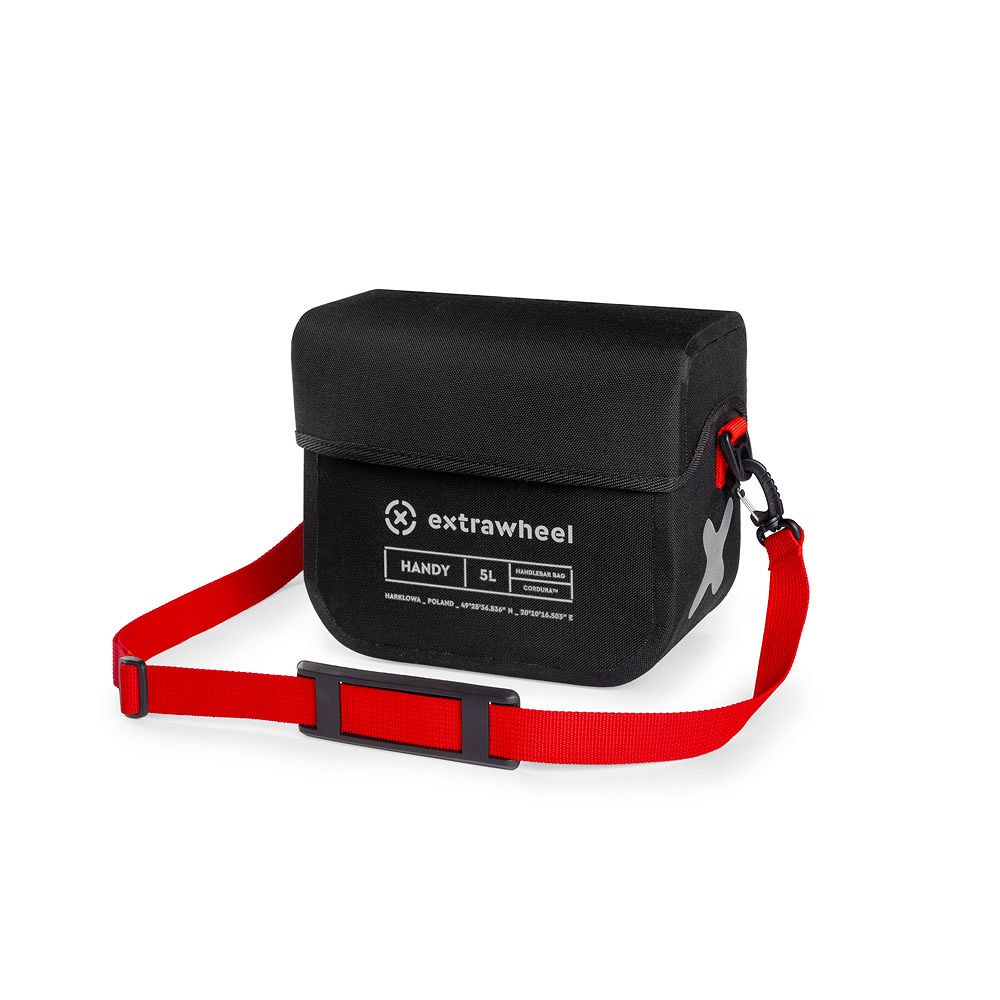
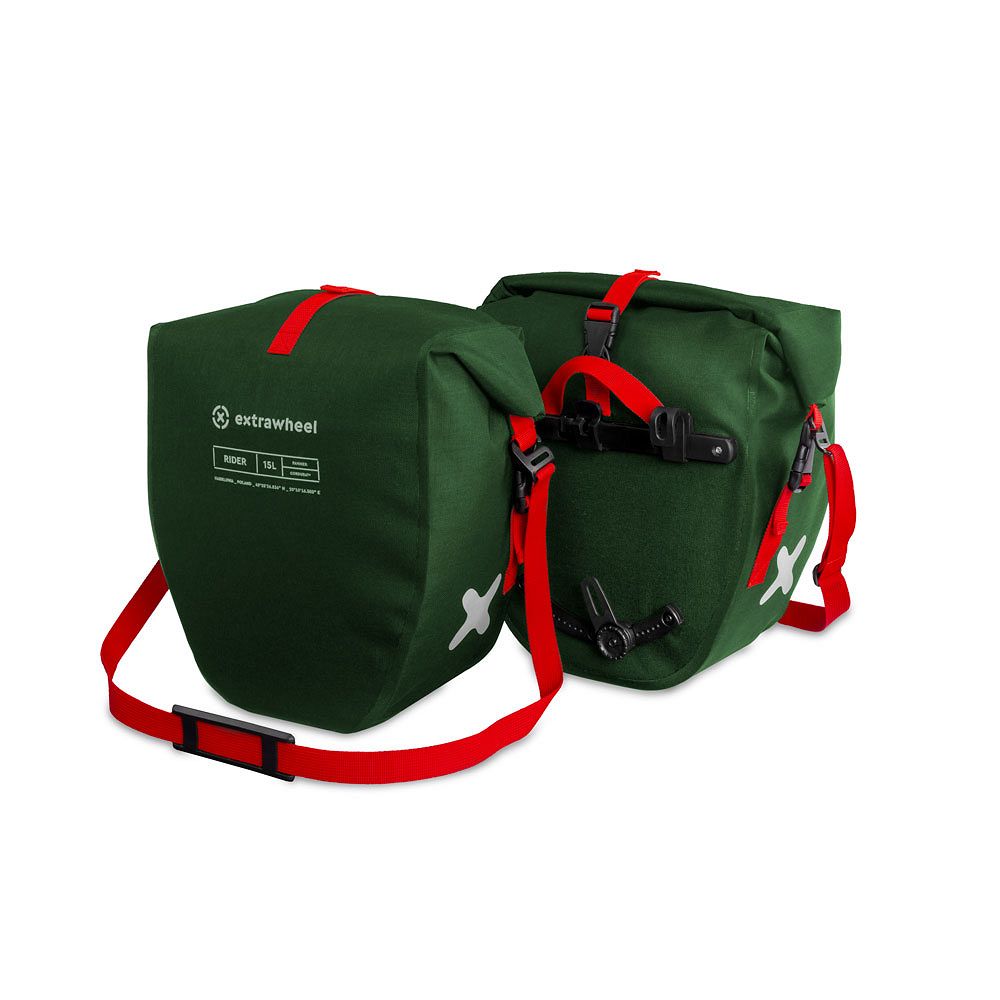
First published: 20 February 2024
Last updated: 17 August 2026
HFW welding is one of the technologies used to manufacture equipment intended to protect luggage from rain, mud and moisture. It can join layers of a carefully selected material without making conventional needle holes in the principal welded areas of the construction. The weld alone, however, does not determine the performance of the complete product. Protection also depends on the material coating, product design, roll-top closure, installation of the remaining components and correct use.
Extrawheel uses high-frequency welding in selected panniers, bags and dry bags manufactured in Poland. This article explains the process from a technical perspective, identifies its benefits and limitations and shows which pannier models use HFW construction.
The short answer: HFW, or High Frequency Welding, is a method of joining compatible thermoplastic materials using a rapidly alternating electromagnetic field and pressure. Energy heats the layers in the future joint, while a specially shaped electrode presses them together. Once the energy cycle has ended and the material has cooled, a durable weld is formed.
What do HFW, HF and RF mean?
Several names used in technical descriptions refer to the same type of process:
- HFW – High Frequency Welding,
- HF welding – a shortened form of high-frequency welding,
- RF welding – Radio Frequency Welding,
- dielectric welding – another technical name for the process.
These terms emphasise different aspects of the same method. It should not be confused with ultrasonic welding. In HFW, an electromagnetic field excites the material, whereas ultrasonic welding supplies energy through mechanical vibration.
| Key question | What does it mean in practice? |
|---|---|
| What can HFW join? | Thin layers of compatible thermoplastics and textiles with a suitable thermoplastic coating |
| Where does the heat come from? | It is generated within the material under a rapidly alternating electromagnetic field |
| What determines the joint shape? | The electrode and tooling define the path and width of the weld |
| What stabilises the weld? | The combination of energy, suitable pressure, process time and cooling under pressure |
| What does HFW not guarantee by itself? | Waterproofness of the complete product without the right material, design, closure and manufacturing control |
How does high-frequency welding work?
According to the RF welding process described by The Welding Institute, a rapidly alternating electric field acts on polar molecules present in selected thermoplastics. Movement and reorientation of these molecules generate heat within the material. The energy is therefore not supplied solely by the external surface of a heated tool.
In practice, a production cycle comprises several repeatable stages. Their precise parameters depend on the material type and thickness, weld area, component design and tooling used.
- Preparing the components. Cut parts must have the correct shape, clean surfaces and properly positioned overlap zones.
- Positioning the material. The layers are placed in the tooling so that the weld follows the location defined in the design.
- Applying electrode pressure. The tool stabilises the components and defines the shape of the future joint.
- Applying high-frequency energy. The electromagnetic field heats the compatible thermoplastic layers in the welding zone.
- Joining under pressure. The softened layers combine into a continuous joint.
- Cooling under pressure. Maintaining pressure briefly after the energy has been switched off helps stabilise the weld shape and structure.
- Inspecting the joint. Continuity, location and appearance of the weld, as well as conformity of the completed component with the design, are checked.
There is no single set of parameters suitable for every product. Quality is influenced by power, energy time, pressure, temperature profile, material type and thickness, electrode geometry and cooling method. Introducing a new model therefore requires the design, material, tooling and process settings to be matched to one another.
Why is HFW used in bicycle panniers?
Conventional sewing mechanically joins layers with thread. It is versatile, allows complex shapes to be produced and works well in many textile constructions. A needle does, however, make holes in the material, so the seams of a product intended for use in rain require appropriate design and protection.
Conventional needle holes are not made within an HFW-welded area. Instead, the thermoplastic coating layers are joined into a continuous zone that follows the electrode shape. For this reason, welded bicycle panniers, dry bags and other products made from coated materials can reduce potential paths for water ingress in the joined areas.
| Feature | HFW welding | Conventional sewing |
|---|---|---|
| Joining method | Compatible thermoplastic layers are joined using energy and pressure | The material is joined mechanically with thread |
| Needle holes | None within the weld itself | Created along the stitching line |
| Materials | Requires a material or coating that responds correctly to a high-frequency field | Can be used with a very broad range of fabrics |
| Tooling | Requires electrodes and settings developed for the specific component | A shape change usually requires less specialised tooling |
| Protection from water | A continuous weld reduces potential water paths through the joined area | Seams must be designed and protected for the intended use |
This does not mean that every welded construction is automatically better than every sewn one. The choice of technology depends on the material, shape, product function, required weight, repair options and intended use. The Extrawheel range therefore includes both HFW models and sewn panniers with suitably protected seams.
Does HFW make a bicycle pannier waterproof?
HFW can produce waterproof joints, but it does not by itself guarantee that the complete pannier is waterproof. The final result depends on the entire construction:
- the fabric and its coating,
- the continuity and geometry of the welds,
- the construction of the base, corners and junctions between several components,
- the way fittings, rails, straps and other components are installed,
- the design and correct closing of the opening,
- the condition of the material after extended use,
- use of the product in accordance with its instructions.
A roll-top works correctly only after the required number of rolls has been made, the buckles fastened and the upper section properly compressed. For example, the Biker 50 L achieves its full protection during rainy rides after the closure has been rolled four times and the buckles fastened. For other products, follow the closing method specified in their instructions.
Waterproof bicycle panniers should protect luggage during rain and exposure to mud and splashes when closed according to the instructions. This does not automatically mean that a product is intended for prolonged submersion. The distinction matters when comparing individual models.
Which materials can be welded by HFW?
RF/HFW requires materials containing polar molecules that respond appropriately to a rapidly alternating electric field. PVC and selected polyurethanes are among the most commonly welded thermoplastics. Some other polymers can also be joined, although this may require special conditions, a modified formulation or an additional layer.
In technical textiles, welding primarily affects a suitable thermoplastic layer applied to the carrier fabric or incorporated into a laminate. The textile core contributes properties such as mechanical strength, while the coating enables the joint to form and helps restrict water penetration.
Can CORDURA® be HFW welded?
CORDURA® names a family of fabrics rather than one material with an identical construction. Suitability for HFW is determined not by the trade name alone but by the complete material structure, including the thermoplastic layer. A specific fabric must therefore be tested for compatibility and the process settings adjusted before production.
Selected Extrawheel Premium models combine HFW construction with CORDURA® material. More information on the differences between materials is available in our article about CORDURA® for bicycle panniers and bags.
Which Extrawheel panniers use HFW construction?
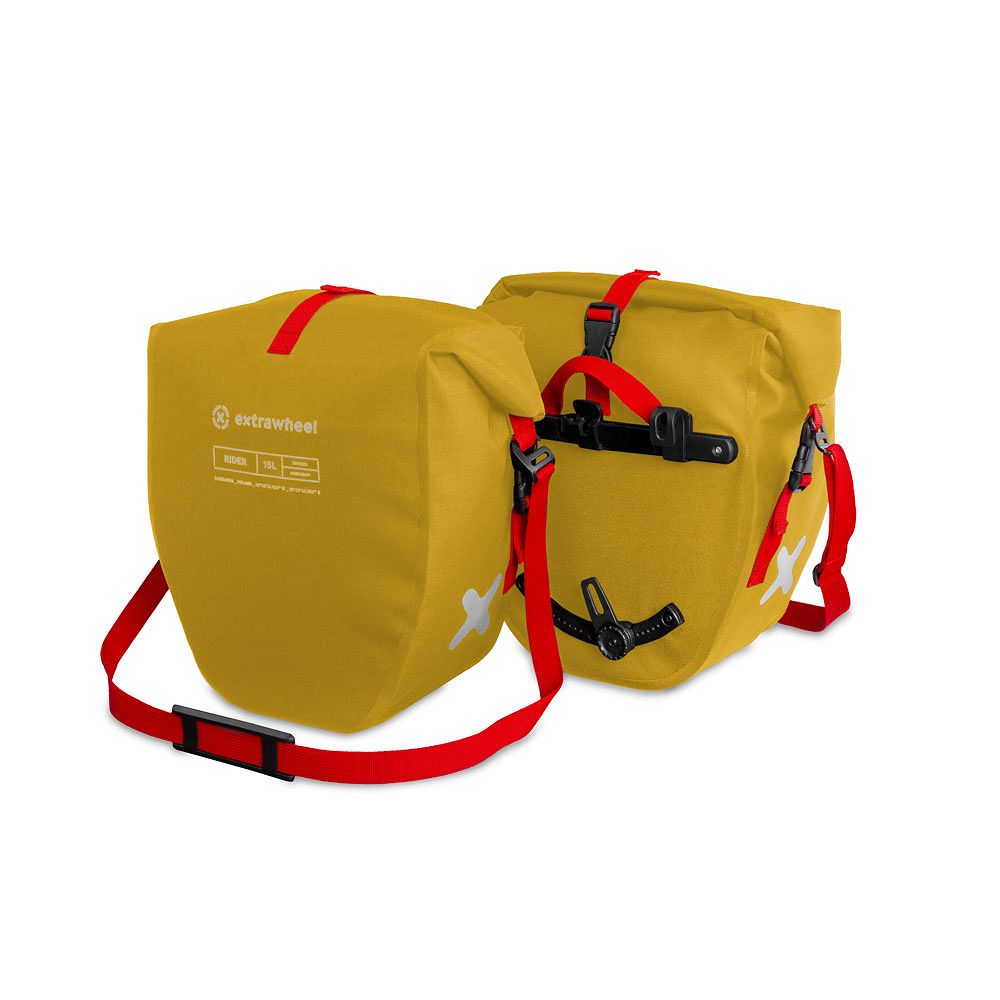
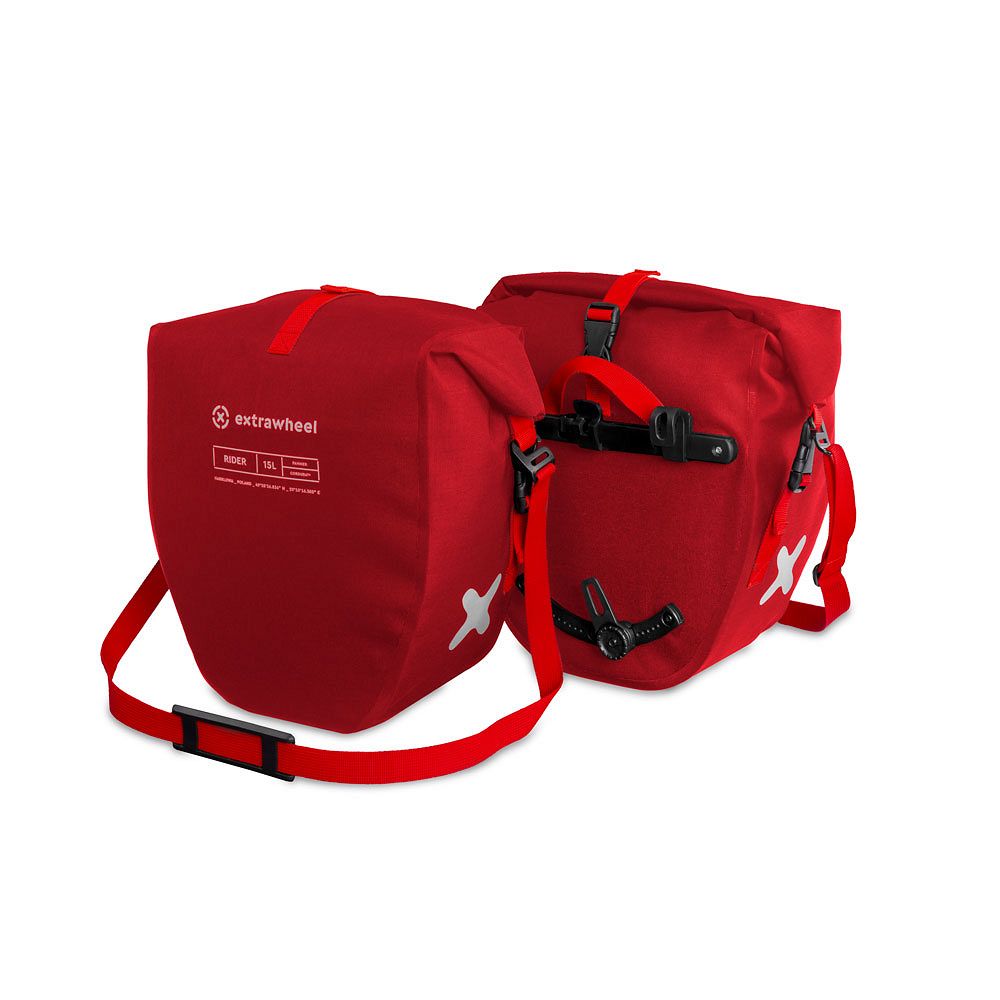
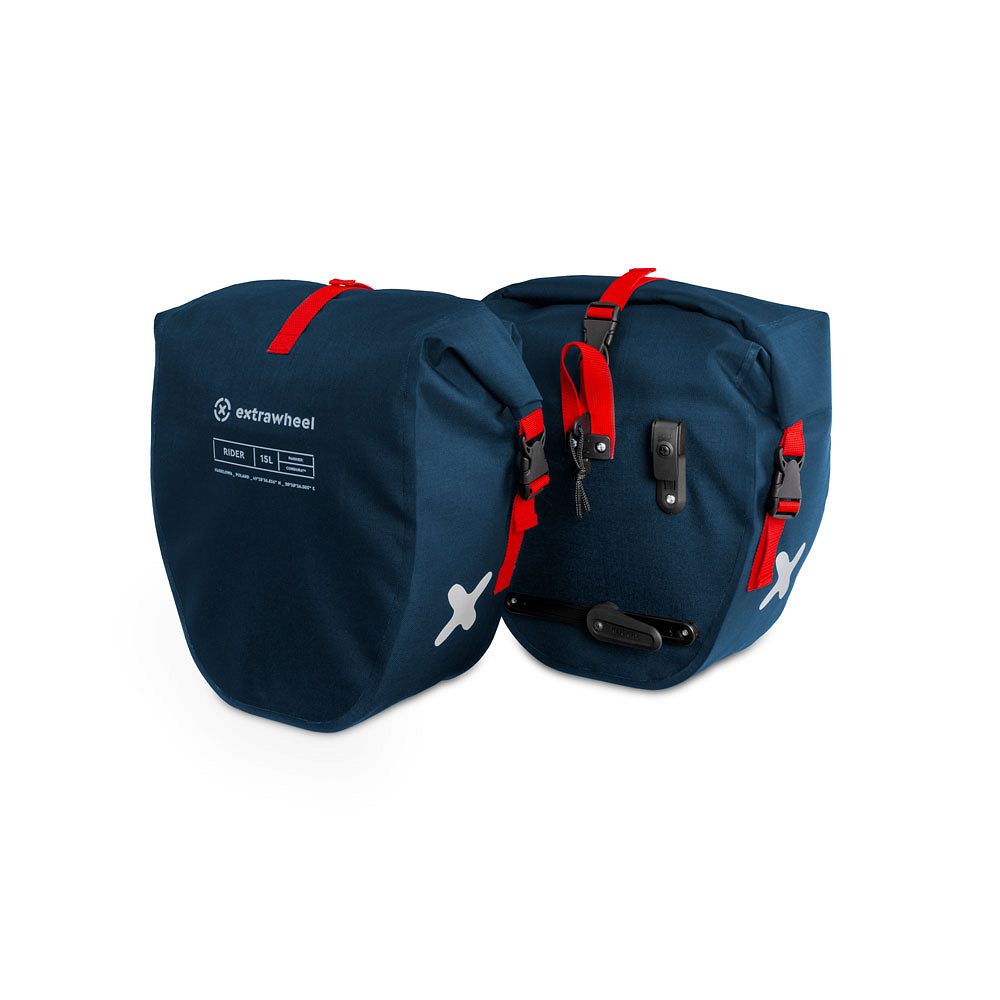
HFW construction is used in the Rider, Biker and Biker PRO families, both in selected coated-polyester versions and their corresponding Premium variants. The table lists models in the current range and links directly to their technical specifications.
| Model | Set capacity | Material | Mounting system | Recommended use |
|---|---|---|---|---|
| Rider 30 L | 30 L (2 × 15 L) | Coated polyester fabric | Rixen & Kaul – fixed upper hook spacing | City riding, weekends and a compatible front or rear rack |
| Rider Premium 30 L | 30 L (2 × 15 L) | CORDURA® | Rixen & Kaul – fixed upper hook spacing | Daily riding and shorter trips with lightweight equipment |
| Biker 50 L | 50 L (2 × 25 L) | Coated polyester fabric | Rixen & Kaul – fixed upper hook spacing | Rear racks, daily riding and multi-day bicycle tours |
| Biker Premium 50 L | 50 L (2 × 25 L) | CORDURA® | Rixen & Kaul – fixed upper hook spacing | A lightweight set of approximately 1.35 kg for longer tours |
| Biker PRO 50 L | 50 L (2 × 25 L) | Coated polyester fabric | Racktime/Tubus – stepless upper-hook adjustment | Touring, different racks and use on more than one bicycle |
| Biker PRO Premium 50 L | 50 L (2 × 25 L) | CORDURA® | Racktime/Tubus – stepless upper-hook adjustment | Touring with an adjustable mounting system and Premium material |
The Rambler and Wayfarer families have a different construction: their components are sewn and the seams are suitably protected. The complete range should therefore not be described as welded. For a full comparison of capacities, materials and mounting systems, see our guide to choosing bicycle panniers.
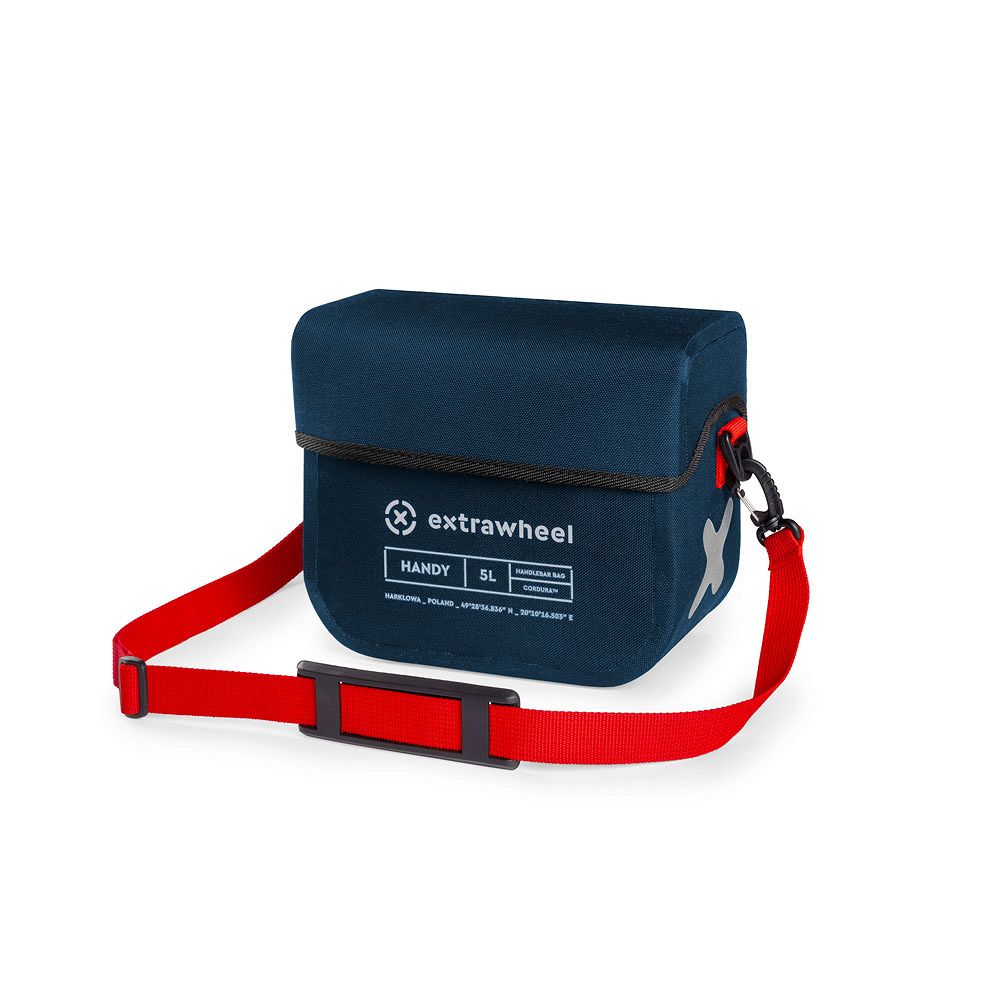
The technology is also used in selected bags and Extrawheel dry bags. Always check the description of the individual product, because not every material and construction is made in the same way.
What determines the quality of an HFW weld?
A repeatable weld results from matching several elements at the same time. Merely having an HFW machine is not enough. The process requires the right material, a properly designed joint zone, stable positioning, a correctly made electrode and process settings selected for the specific component.
- Material type and thickness affect energy absorption and the required cycle time.
- Surface cleanliness affects joint continuity.
- Electrode geometry determines the shape, width and path of the weld.
- Power, time and pressure must form a stable combination of parameters.
- Cooling under pressure helps stabilise the joint without unwanted deformation.
- Component positioning determines whether the finished part retains the correct dimensions and symmetry.
Weld inspection can include visual assessment, measurement of the joint position and width, pull or peel tests and tests related to the leak resistance of the completed component. The scope of inspection should reflect the product’s purpose and the stage of the process: validating a new material is a different task from monitoring repeatability during routine production.
HFW compared with adhesives, hot-air and ultrasonic welding
Methods for joining plastics are not interchangeable in every situation. They are selected according to the material, thickness, geometry and required process efficiency.
- HFW/RF generates heat in a compatible material using an electromagnetic field, with the joint forming under electrode pressure.
- Hot-air welding heats the surfaces with an air stream and joins them under the pressure of rollers or a tool.
- Ultrasonic welding uses high-frequency mechanical vibration.
- Adhesive bonding introduces an additional bonding agent between the layers; its properties must suit both the material and the conditions of use.
HFW is particularly useful for repeatable components made from suitably selected coated fabrics. Its limitations include the need for a compatible material and dedicated tooling. The technology must therefore be considered while the product is being designed, not only after its components have been cut.
Manufacturing HFW-welded Extrawheel panniers in Poland
Selected HFW bicycle panniers are designed and manufactured at the Extrawheel facility in Harklowa, Poland. HFW technology is considered from the design stage. The process includes material selection, preparation of patterns and tooling, parameter setting, welding, installation of the mounting components and inspection of the finished product.
Local production supports direct control of individual stages, construction updates and after-sales servicing. Hooks and selected mounting-system parts can be replaced without replacing the entire pannier set. More information about the brand’s history, manufacturing location and technologies is available on the About Extrawheel page.
To compare every current model, visit the Extrawheel bicycle panniers category. Before buying, check not only how the material is joined but also the capacity, hook spacing, rack-tube diameter, lower-hook position and weight of the set.
FAQ – high-frequency welding in bicycle panniers
Do HFW, HF and RF describe the same technology?
Yes. HFW and HF refer to high-frequency welding, while RF means radio-frequency welding. Technical literature also uses the term dielectric welding. All these names describe a process that uses a rapidly alternating electromagnetic field to heat compatible material.
Does a welded pannier contain no stitching at all?
That should not be assumed. HFW replaces stitching in areas designed to be welded, but the completed product may also contain components installed by another method. Actual protection from water depends on the full construction, not merely on the word “welded”.
Can every material be HFW welded?
No. The material must respond appropriately to a high-frequency field. PVC and selected polyurethanes are used most often. In technical textiles, the coating or laminate is critical, not simply the fibre used for the carrier fabric.
Can CORDURA® be welded?
It depends on the specific version and its layers. The CORDURA® name alone does not determine weldability. The material requires a suitable thermoplastic layer, while its use requires tests and process adjustment. Selected Extrawheel Premium models use HFW construction with CORDURA®.
Are all Extrawheel panniers welded?
No. HFW construction is used by the Rider, Biker and Biker PRO families and their corresponding selected Premium versions. Rambler and Wayfarer models are sewn and have suitably protected seams. Always check the individual product page.
Does HFW guarantee complete waterproofness?
HFW creates a continuous joint without needle holes in the welded area, but waterproofness of the complete product also depends on the material, design, closure, installation of other components and correct use. Protection during rainfall does not necessarily mean resistance to prolonged submersion.
Do welded panniers need an additional rain cover?
Properly manufactured and closed waterproof models do not require an additional cover during typical riding in rain. The roll-top must, however, be rolled and the buckles fastened according to the instructions for the particular model.
Can a welded pannier be repaired?
Repair options depend on the location, type and size of the damage. Mounting-system components such as selected hooks can be replaced. Damage to the body or weld requires individual assessment by the service team because an unsuitable repair may reduce waterproofness or weaken the material.
How should HFW panniers be maintained?
After riding, remove mud with water and a soft sponge, let the product dry before storage and avoid aggressive solvents. Do not overload the panniers, and inspect areas that may rub against the rack. Our guide explains how to pack bicycle panniers properly.
Summary
High-frequency welding joins compatible thermoplastic materials through an electromagnetic field, pressure and a controlled process cycle. In bicycle panniers, it can reduce conventional stitching in the main body areas and create continuous joints that support protection of the luggage from water.
The quality of a completed pannier is not determined by a single technical label. The material, design, tooling, process settings, closure construction, manufacturing control and correct use all matter. When comparing models, check the complete specification rather than the HFW statement alone.
Author: Radoslaw Rakoczy, Extrawheel sp. z o.o. – company co-owner involved in developing and manufacturing bicycle touring equipment.
Basis of this article: Extrawheel manufacturing experience and technical resources published by The Welding Institute on RF welding of thermoplastics.
 Polish
 German
 French