


Bicycle Touring
Bicycle Touring on the Extrawheel blog brings together first-hand stories from journeys through Europe and other parts of the world – from family trips and short tours with panniers to long-distance adventures across entire countries. The authors describe not only the places they visited but also the individual stages, conditions on the road, accommodation, equipment, problems encountered and decisions made along the way.
A good bicycle touring story lets readers experience the journey from the perspective of someone who actually completed it. It explains what worked in practice, what needed to be changed and which lessons may help other cyclists prepare for their own tour.
What is bicycle touring?
Bicycle touring is a form of travel in which the bicycle is the primary means of transport and the journey consists of successive stages, with luggage, rest, accommodation and resupply planned along the way. There is no universally accepted minimum number of days or kilometres that turns a bicycle ride into a tour.
A weekend journey with an overnight stay can be bicycle touring if it requires route planning, luggage transport and a degree of self-sufficiency. A ride completed in one day without an overnight stay is usually described as a day ride or cycling trip. The nature of a tour is therefore determined not only by its distance and duration but also by the way it is organised and the level of independence required.
Bicycle touring does not have to be long or extreme. You can travel alone, as a couple, in a group or with children. You may camp, stay at campsites or use permanent accommodation. The plan should always match the experience of the participants, the type of bicycle, the amount of luggage and the expected conditions.
What should a reliable bicycle touring story include?
A reliable account goes beyond descriptions of scenery and attractions. It should explain who completed the journey, when it took place and under what conditions. This helps readers distinguish the author’s personal experience from practical information that may change over time.
A useful bicycle touring story should include:
- the destination, travel dates and number of participants,
- the total distance, number of days and length of individual stages,
- the road surfaces, terrain and weather conditions,
- the arrangements for accommodation, resupply and bicycle transport,
- the bicycle, luggage system and method used to distribute the equipment,
- problems, mechanical issues, changes of plan and solutions used on the road,
- the author’s conclusions and anything they would prepare differently next time.
This context helps readers interpret an author’s experience correctly. Pace, daily distance and perceived difficulty depend on fitness, weather, luggage weight, road surfaces and individual riding style.
Bicycle touring stories from Europe and beyond
This category covers different ways of travelling by bicycle and shows that a cycling adventure can be both a family experience and a long-distance challenge. Published stories include:
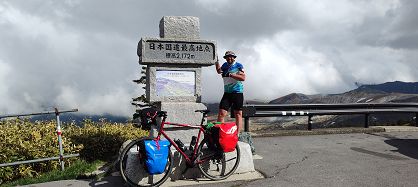
- Japan Expedition 2023 – a story from a 28-day journey through Japan covering 2,462 km,
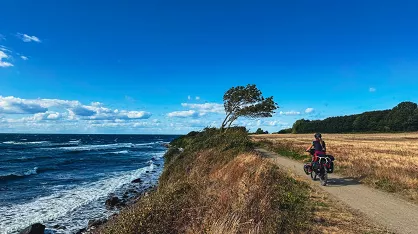
- Bornholm by bike with panniers – Aleksandra and Daniel Sienkiewicz’s first-hand account of a two-day route, an overnight stay in a shelter and the equipment used during the journey,
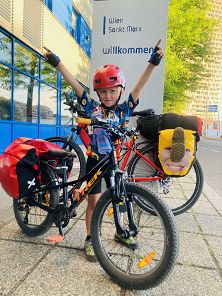
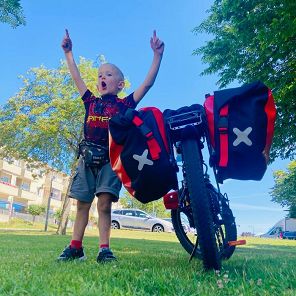
- bicycle trips with panniers for a family with a 6-year-old – family experiences presented from the perspective of a child and his parents.
These stories are not fixed itineraries that must be repeated without changes. They provide experience and inspiration that can be used to plan a journey suited to your available time, abilities and preferred level of independence.
How do you plan your own bicycle tour?
Start by defining the character of the journey: the number of days, destination, type of accommodation, planned daily distance and the amount of equipment you intend to carry. Only then should you choose the exact route and adapt the bicycle and luggage system.
- Define the purpose of the journey, available time and intended level of self-sufficiency.
- Divide the route into stages that reflect the terrain, surfaces and abilities of the participants.
- Check accommodation, water and food supplies, repair services and rail or ferry connections.
- Prepare shortcuts, alternative routes and additional places where a stage can be ended.
- Match the bicycle, rack and luggage system to the weight of the equipment.
- Test the fully loaded bicycle before departure and allow extra time for weather, mechanical problems and unplanned stops.
Detailed information about route distance, surfaces, elevation and logistics can be found in the Cycling Routes category. Instructions concerning bicycle preparation, equipment and the safe use of luggage are available in Cycling Guides.
Bicycle touring with panniers – how should you plan your luggage?
There is no single luggage capacity suitable for every bicycle tour. The space required depends on the length of the journey, season, type of accommodation, access to shops, opportunities to wash clothing and whether you need to carry a tent, cooking equipment and food supplies.
On a multi-day tour, the main load can be carried in bicycle panniers, frequently used items can be kept in a handlebar bag, and a sleeping bag, tent or bulky camping equipment can be protected in a dry bag. The final arrangement must suit the bicycle and remain within the load limits specified by the manufacturers of the bicycle, rack and luggage system.
Place heavier items low and close to the centre of the bicycle, with a similar load on the left and right sides. Our guide to packing bicycle panniers properly explains the principles of weight distribution and luggage organisation in greater detail.
How current is the information, and whose experience does it represent?
Every story describes a journey completed at a particular time and under specific conditions. Roads, accommodation, camping regulations, railway and ferry connections, border requirements, prices and resupply options may change. Before departure, check current information from route managers, transport operators, local authorities and weather services.
In articles based on completed journeys, we identify the authors and explain the context of the trip, while separating personal observations from information that requires current verification. The stories can therefore provide practical experience, but they do not replace current maps, timetables, regulations or official notices.
Extrawheel is a Polish manufacturer of bicycle panniers and bike bags that has been developing bicycle touring equipment since 2005. We combine practical product knowledge with stories from people who completed the journeys described. Particular attention is given to luggage organisation, the real-world performance of equipment and the demands of multi-day bicycle touring.
 Polish
 German
 French